Becoming a Dental Equipment Agent in Saudi Arabia: A Sourcing Framework for KSA Distributors
How Saudi Arabian medical equipment companies build an exclusive-agent relationship with a Chinese dental manufacturer — covering SFDA MDMA licensing, territory terms, Jeddah/Dammam port logistics, Arabic labeling, and agency structures.
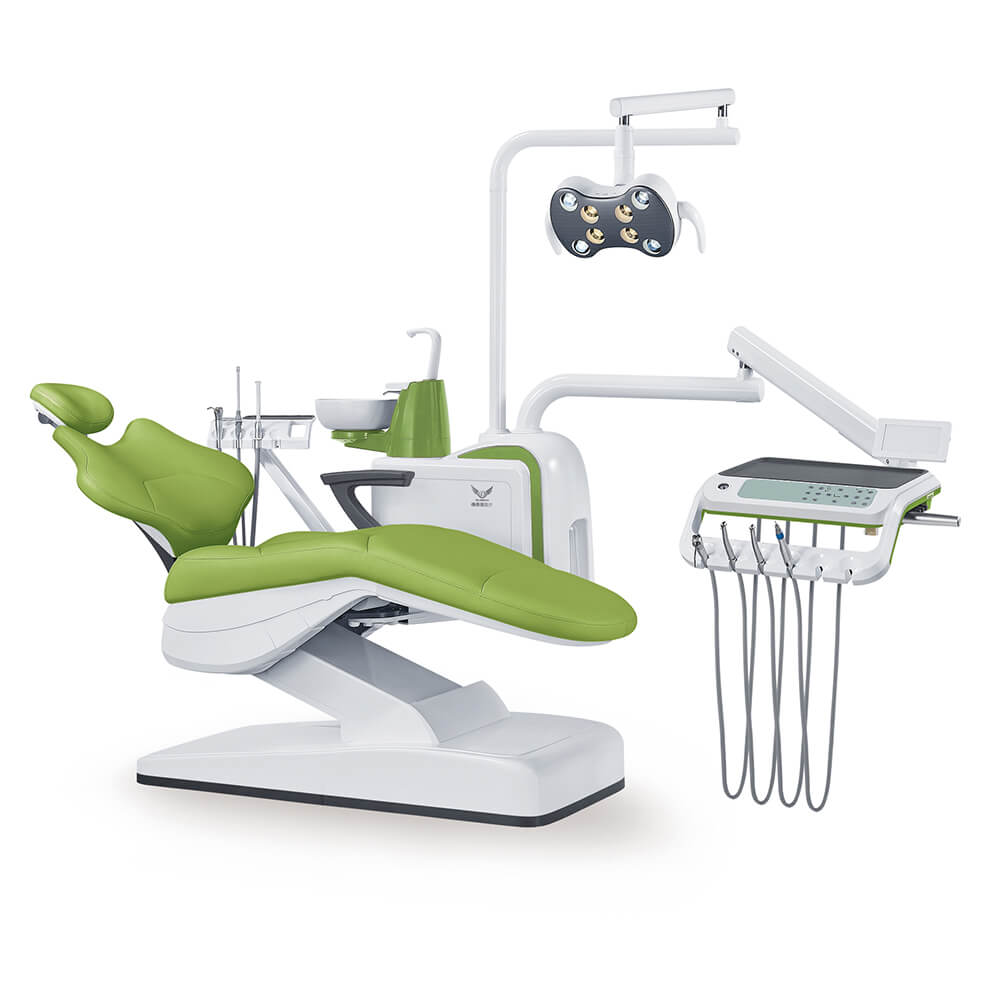
Saudi Arabia's dental sector has shifted substantially in the Vision 2030 era. Public-sector expansion (MOH hospitals, Ministry of National Guard health facilities, Saudi Aramco medical services) combined with aggressive private-sector growth in Riyadh, Jeddah, and Dammam has created one of the GCC's fastest-growing dental equipment markets. A consistent pattern in our inquiry inbox: a Saudi-based medical equipment engineering company, often with existing SFDA relationships across other medical categories, seeking to add dental to their portfolio by becoming the exclusive agent of a Chinese dental equipment manufacturer. This guide walks through how that agency structure actually works.
"I am an engineer at a Saudi medical equipment company looking for a dental appliance factory to become an agent for it in Saudi Arabia."
— Medical equipment engineer, Saudi Arabia (contact on file)
The KSA dental market in concrete numbers
Saudi Arabia has approximately 36 million residents, with dentist density rising from ~30 per 100,000 in 2015 to over 55 per 100,000 by 2024 as Saudi nationals increasingly enter the profession. Private-sector dental clinics have expanded at roughly 8–12% CAGR since 2020, and new facility openings concentrate heavily in the Riyadh metropolitan area, Jeddah, Dammam/Khobar, and the Eastern Province. Equipment procurement characteristics that shape an agency relationship:
- Public-sector procurement is tender-based and slow — MOH and MNG-HA tender cycles run 6–18 months. Price alone rarely wins; documentation, SFDA compliance, and local service coverage dominate scoring.
- Private-sector decisions are relationship-driven — clinic owners and dental chain CFOs buy from agents they know, often through recommendations of respected clinical advisors.
- Service coverage matters disproportionately — Saudi clinics expect next-day field service for installed CBCT, IOS, and chairs. An agent without a Jeddah + Riyadh service footprint won't win repeat business.
Exclusive vs non-exclusive agency structures
The agency relationship between a Chinese manufacturer and a Saudi distributor takes one of three common forms:
- Exclusive national agent: One agent for all of Saudi Arabia. Manufacturer commits not to appoint other KSA agents; agent commits to minimum annual purchase volumes (typically USD 300,000–800,000 in first year, escalating annually). Best for mature manufacturers with established product lines.
- Non-exclusive multi-agent: Multiple agents appointed per city or region. Lower commitment from each agent but less territorial protection. Common for new products or when the manufacturer wants rapid market entry.
- Master distributor + sub-dealers: One master distributor holds the SFDA registration and imports; smaller regional dealers buy from the master. Simplifies the manufacturer's compliance burden.
For this kind of engineering-led Saudi distributor, the exclusive national agent structure is typically the right ask — provided the agent can commit to the minimum volume targets and stand up Jeddah + Riyadh service coverage within the first 6 months.
SFDA: the non-negotiable compliance path
The Saudi Food and Drug Authority regulates medical devices through the Medical Devices Law and the GHAD (Gulf Harmonized Approach) classification framework. Dental equipment falls across Class I, IIa, IIb, and III depending on the device:
- Dental chairs without integrated powered instruments: Class I. Simple notification registration.
- Intraoral scanners, dental handpieces: Class IIa. Full MDMA license required.
- Panoramic X-ray, CBCT, 3D printers for dental applications: Class IIb. Full MDMA license with higher scrutiny on clinical evidence.
- Implants (bone-contacting): Class III. Most demanding review, clinical evaluation required.
The Saudi agent must hold an MDMA (Medical Device Marketing Authorization) license from SFDA. The agent is the Marketing Authorization Holder on SFDA's registry — meaning the agent is legally responsible for the device in-country, not the manufacturer. Practical implications:
- Agent is the point of contact for SFDA inspections, post-market surveillance, and adverse event reporting
- Agent must maintain documented training records for clinical users
- Agent holds records of device distribution (which clinic bought which serial number) — required for recalls
- Agent files annual reports; SFDA conducts periodic facility audits of the agent's warehouse + service operations
SFDA registration for a Class IIb dental CBCT takes 6–10 months typical timeline, 4–6 months for Class IIa scanners, 2–3 months for Class I chairs. The manufacturer provides the technical file (ISO 13485 cert, CE marking, device description, IFU, labeling); the agent submits through SFDA's Ghad Portal and responds to queries.
Arabic labeling: a structural requirement
SFDA requires all medical device labeling, user manuals, and clinical instructions to be bilingual (Arabic + English). This is not optional and not something an agent can waive. For Chinese manufacturers, the practical impact:
- Device housing labels must be Arabic + English (applied at factory, typically during the OEM/agent branding stage)
- User manual must include full Arabic translation — manufacturer responsibility, but agent typically coordinates translation with SFDA-approved linguistic partners
- Safety labels (radiation warnings, electrical cautions) must be in Arabic
- Regulatory identifiers (manufacturer name, importer name, SFDA registration number, model, serial, country of origin) must be clearly visible in Arabic
Budget USD 800–2,500 per device SKU for first-time Arabic labeling development. The cost amortizes across all units sold thereafter.
Shipping Shanghai → Jeddah or Dammam
Saudi Arabia has two primary container ports serving dental equipment imports:
- Jeddah Islamic Port (Red Sea): The dominant entry point for western Saudi Arabia and Riyadh-bound shipments via truck. Shanghai → Jeddah direct: 22–28 days port-to-port.
- Dammam King Abdulaziz Port (Arabian Gulf): Primary entry for Eastern Province, Qatar and Bahrain transit traffic. Shanghai → Dammam via Singapore transshipment: 28–35 days.
Customs clearance at Jeddah is typically 5–9 business days for medical devices with valid SFDA registration and ZATCA (Zakat, Tax, and Customs Authority) pre-notification. Saudi customs duty on dental equipment is typically 5% of CIF value, plus 15% VAT on the CIF + duty combined. A USD 50,000 FOB CBCT lands all-in near USD 63,000–66,000 after freight, duty, VAT, and inland transport to a Riyadh warehouse.
Payment: Letter of Credit through Saudi banks
Saudi Arabia's banking infrastructure is sophisticated. Agent-to-manufacturer settlement is typically by confirmed Letter of Credit through Saudi National Bank, Al Rajhi Bank, or Riyad Bank. For established agent relationships, open account terms with 30–60 day payment against shipment documents become available after the first 2–3 successful transactions. LC costs run 1–2% of invoice value — built into the agent's margin structure.
Saudization and service workforce
Saudization quotas (the Nitaqat program) apply to medical equipment distributors. Agents must maintain a target percentage of Saudi nationals in their workforce — this affects hiring of field service engineers, clinical applications specialists, and sales staff. Service engineers certified on dental CBCT and IOS platforms are in short supply domestically; leading agents invest in Saudi-national engineer training programs directly with the manufacturer, often in Shanghai for 2–4 weeks of hands-on training per engineer. Factor this training investment into the agency launch plan.
A workable first-year commitment structure
For an engineering-led Saudi distributor establishing an exclusive-agent relationship with a Chinese dental manufacturer, a workable Year 1 structure:
- Exclusive national agency for dental CBCT + IOS + milling machines (limited SKUs in Year 1)
- Minimum purchase commitment: USD 400,000 FOB in Year 1, USD 750,000 in Year 2, USD 1.2M in Year 3
- SFDA registration split: manufacturer provides technical documentation; agent handles submission + fees
- Arabic labeling: agent funds the one-time per-SKU translation (~USD 2,000–5,000 total); manufacturer applies labels at factory
- Service training: 2 Saudi-national engineers to Shanghai for 3 weeks in Year 1, expense-sharing 50/50
- Territory protection: manufacturer agrees not to sell into KSA through any channel other than the appointed agent for the contract term (typically 3 years with 2-year extension option)
Evaluating a Saudi Arabia dental agency opportunity?
WhatsApp us with your company profile — existing product lines, SFDA history, Saudi geographic footprint (Riyadh, Jeddah, Dammam service presence), and target product categories. We'll schedule a discussion to explore whether an exclusive KSA agency aligns with our manufacturing partner's regional strategy.
Chat on WhatsApp →Have a specific unit in mind?
Tell us which model you want and your destination port — we'll quote FOB or CIF with a video demo of the actual unit in our warehouse.