OEM Intraoral Scanners for Indian Distributors: Launching Your Own Brand from Mumbai
How Mumbai-based dental distributors build their own intraoral scanner brand — covering OEM vs ODM, CDSCO Class B registration, MOQ economics, FOB Shanghai to Nhava Sheva logistics, and realistic launch timelines.
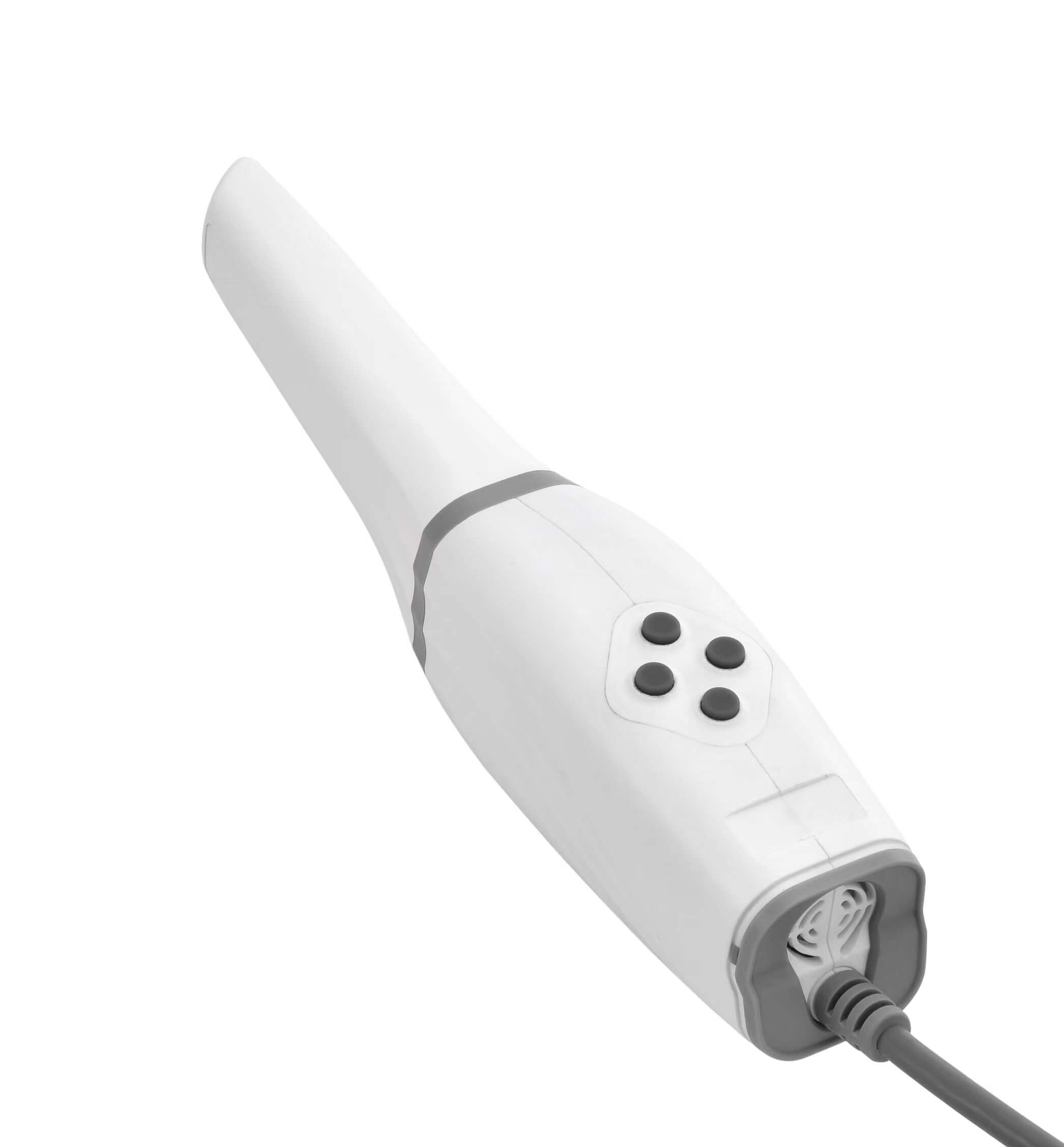
Indian dental distributors asking the same question have started to outnumber end-user clinic inquiries. The pattern is consistent: an established medical-devices trading company in Mumbai, Bangalore, or Delhi with a network of dentists already buying consumables and disposables — now wanting to ride the intraoral scanner adoption curve by launching their own private-label IOS rather than reselling imported brands. A representative recent inquiry from a Mumbai-based dental distributor captures the exact shape of the opportunity: OEM manufacturing, own brand, FOB quote, spec sheets, brochure. This guide walks through what it actually takes to execute that strategy from India in 2026.
"We are looking for manufacturers and exporters of Intraoral Scanners for the Indian market. We are based out of Mumbai, India... We are looking at offering Intraoral scanners in our brand name to our customers. We understand that you are a manufacturer of the same. Kindly send us your best possible FOB (USD) quote along with spec sheets and brochure of product list for us to take matters further."
— Director, dental distributor in Mumbai, India (contact on file)
The Indian IOS market in 2026
India has approximately 300,000 registered dentists and ~30,000 dental labs. IOS penetration in 2020 was under 3% of clinics. Conservative estimates for 2026 put penetration at 12–18% of the urban private practice segment, with adoption accelerating most rapidly among implant specialists and orthodontists. Key market characteristics that shape an OEM strategy:
- Price-sensitive buyers: The dominant IOS brands (3Shape TRIOS, iTero Element, Medit i700, Shining 3D AoralScan) price between USD 10,000–25,000 in India after distributor margin and GST. Indian private-practice dentists consistently ask why they're paying USD 15,000+ for a device that costs under USD 4,000 FOB in China.
- Brand relationships matter: A Mumbai-based distributor with 8+ years of dentist relationships has real pricing power. Indian dentists buy on trust — a familiar distributor's private label at USD 7,000–9,000 is a compelling offer against a 3Shape unit at USD 18,000.
- Training and support are the moat: The economics of IOS ownership depend on chairside scan quality and exocad/3Shape/Bluesky Bio workflow integration. A distributor who bundles 2 days of in-clinic training with the unit captures a structural advantage over import-only competitors.
OEM, ODM, private label — what to actually order
The terminology matters because the economics differ substantially:
- White label (simplest): Your logo printed on an existing production model. MOQ typically 20–50 units. Cost 10–15% above the manufacturer's standard wholesale price. You get brand visibility but no technical differentiation.
- OEM (your brand, factory platform): Your brand + custom housing color, packaging, and manuals based on the factory's existing scanner internals. MOQ typically 50–100 units. Cost 15–25% above wholesale. 8–12 week lead time for first production batch. Best balance of cost and differentiation.
- ODM (joint design): Collaborative design with the factory — custom firmware branding, proprietary scanner tip geometry, integrated cloud. MOQ 200+ units. Cost 30–50% above wholesale. 6+ months lead time. Only justified for distributors committing to 500+ units/year.
For a Mumbai distributor launching a first IOS SKU, OEM with 50-unit MOQ is the sweet spot. You get your own brand, distinctive packaging, Hindi+English manuals, and a 3-year warranty you can underwrite locally — all at price points that land competitively against 3Shape or Medit in Indian tier-1 city practices.
Platform options: DP, PD, and CJ scanners
The three scanner platforms we currently OEM for international distributors:
- DP Scanner (fast & practical): 15–20 µm accuracy, 1.2 min full-arch, 210g lightweight handpiece, calibration-free, LED light source (no laser). FOB Shanghai: USD 3,200–3,800 per unit at 50-unit MOQ. Target retail USD 6,500–7,500 in India.
- PD Scanner (flagship precision): ≤10 µm precision, aviation-aluminum 228g handpiece, full HD color, AI auto tissue removal. FOB Shanghai: USD 4,800–5,600 at 50-MOQ. Target retail USD 9,500–11,500 in India.
- CJ Scanner (small-tip comfort): 20 µm accuracy, one of the smallest tip sizes in the industry, extended depth-of-field to 19mm. FOB Shanghai: USD 2,900–3,400 at 50-MOQ. Target retail USD 5,500–6,500 in India — an aggressive entry-level price point that can open the second-tier and tier-3 city markets.
All three are open-architecture with OBJ/STL/PLY export to Exocad, 3Shape Dental System, and Bluesky Bio workflows — meaning Indian dental labs can accept scans regardless of which brand the dentist uses. Autoclavable tips, 20–50 reuse cycles, predictable consumable economics.
CDSCO Class B registration
Intraoral scanners in India are regulated by the Central Drugs Standard Control Organisation (CDSCO) under the Medical Device Rules 2017. IOS is classified as Class B (low-moderate risk). The importer (OEM distributor) registers the device in their own brand name through a CDSCO-licensed Medical Device Agent. Timeline:
- Appoint an Indian Authorized Representative / Medical Device Agent (mandatory)
- Compile technical file: Essential Principles checklist, manufacturer's ISO 13485 certificate, device description, risk management file (ISO 14971), clinical evidence
- CDSCO Form MD-15 submission with fees (~INR 1.5–2 lakh for Class B)
- Dossier review and query resolution: 4–9 months typical
- Import License issued upon approval; Form MD-14 manufacturing license if local assembly planned
Plan a full 6–9 months between first supplier engagement and your first unit available for commercial sale in India. This is the single longest-lead-time item in the launch plan. Start the CDSCO process in parallel with supplier qualification and MOQ negotiation.
Shipping Shanghai → Nhava Sheva: logistics
Mumbai's container port of Nhava Sheva (JNPT — Jawaharlal Nehru Port Trust) is the primary landing for IOS shipments to western India. For smaller MOQ batches (50–100 scanners), air freight through Mumbai CSMIA is often faster and proportionally not much more expensive:
- Ocean Shanghai → JNPT (Nhava Sheva): 16–22 days port-to-port, USD 600–1,200 per LCL cubic meter, USD 1,600–2,400 per 20ft FCL. First-batch 50 scanners fit in ~2 m³ — LCL is typical.
- Air Shanghai → Mumbai CSMIA: 3–5 days, USD 5–8 per kg. A 50-unit batch weighs ~100 kg with packaging — roughly USD 500–800 in freight vs USD 1,600 ocean LCL. For small MOQs, air is often the better choice.
Indian customs duty on Class B medical devices: 7.5% BCD (Basic Customs Duty) + 18% IGST (Integrated GST) + 1% Social Welfare Surcharge. Effective landed uplift is ~27–29% on CIF value. A USD 5,000 FOB scanner (PD-class) lands at roughly USD 6,500–6,800 CIF Mumbai before your distributor margin.
Launch economics: a worked example
For a Mumbai distributor launching a PD-platform OEM scanner under their own brand, 50-unit first batch:
- 50 × PD Scanner, OEM-branded: USD 4,800/unit FOB Shanghai = USD 240,000
- Custom packaging, manuals in English + Hindi: USD 4,500 one-time tooling
- Air freight Shanghai → Mumbai: USD 700
- Customs + IGST + SWS: USD 64,500
- CDSCO registration + MDA fees (amortized): USD 3,500 one-time
- Inland transport, warehousing, QA: USD 2,000
- Total landed cost, 50 units: ~USD 315,200 = USD 6,304 per unit
- Target distributor wholesale to dentists: USD 8,500–10,000 per unit (~35–55% gross margin)
- Target retail in clinic: USD 9,500–11,500 per unit (including 2-day installation + training)
At 50 units sold through in 6–9 months, gross margin on the first batch lands in the USD 110,000–185,000 range — which comfortably absorbs the CDSCO registration one-time cost and funds the second 100-unit batch. Unit economics improve substantially on the second batch as MOQ rises and the brand gains traction.
Post-sale: where most private labels fail
An OEM IOS brand doesn't fail on cost or spec — it fails on post-sale support. The dentist buying a new scanner needs: on-site installation and first-case coaching; exocad/3Shape workflow integration support; autoclavable tip supply chain reliability; and a trusted warranty repair path. Budget for and hire a dedicated IOS application specialist before selling your 10th unit. Indian dentists talk to each other; one botched installation derails 5–10 future sales in the same city.
Considering an IOS OEM launch in India?
WhatsApp us with your target brand name, planned launch timeline, first-batch volume, and preferred scanner platform (DP / PD / CJ). We'll respond with unit-level FOB pricing at your MOQ, a CDSCO registration timeline we can support, and our recommended Indian authorized representative partners.
Chat on WhatsApp →Have a specific unit in mind?
Tell us which model you want and your destination port — we'll quote FOB or CIF with a video demo of the actual unit in our warehouse.