CBCT Installation and Radiation Shielding: Room Design and Regulatory Framework
How dental practices plan CBCT installation and radiation shielding — shielding calculation framework (workload, use factor, occupancy factor, dose limit), lead sheet and lead-lined drywall construction, operator barrier design, leaded viewing window, NCRP and EURATOM regulatory frameworks, installation timeline, and FOB Shanghai commissioning budget analysis.
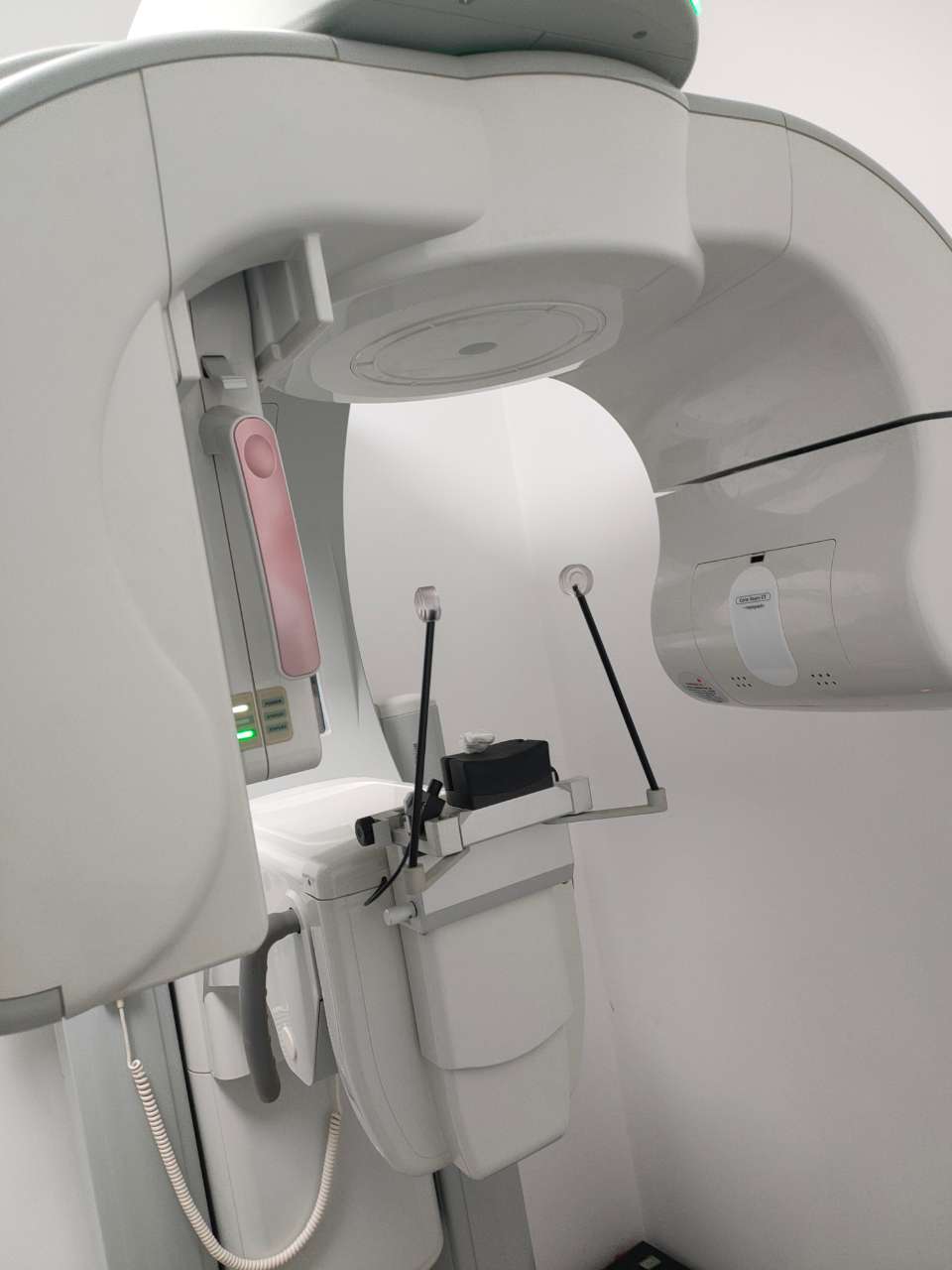
CBCT installation and radiation shielding room design is frequently underestimated in commissioning planning. Unlike intraoral X-ray units or even panoramic X-ray machines, CBCT’s longer rotation time, specific beam geometry, and higher workload profile create distinct shielding requirements. Inadequate shielding creates regulatory failures, operator safety issues, and occasionally requires expensive post-installation rework. This guide walks through CBCT shielding calculation frameworks, practical room design considerations, regulatory pathways, and installation planning for practices commissioning CBCT from Shanghai.
CBCT-specific shielding considerations
Why CBCT is different from other dental X-ray
- Primary beam duration: CBCT scans typically 10–20 seconds vs. intraoral radiograph 0.2–0.8 seconds. Longer duration = more scatter
- Higher workload factor: CBCT practices typically capture 8–30 scans per day vs. intraoral practices capturing individual radiographs
- Rotating beam geometry: CBCT rotates around patient; scatter direction varies through rotation requiring comprehensive wall shielding
- Higher kVp: CBCT typically 80–120 kVp vs. intraoral 60–70 kVp; higher penetration requires more shielding
- Pulsed vs. continuous beam: pulsed CBCT reduces integrated dose; shielding calculations vary accordingly
Shielding design inputs
Shielding thickness calculation requires specific inputs:
- Workload (W): weekly patient radiation workload in mA-min
- Use factor (U): fraction of workload directed at each barrier (typically 0.25 for walls, less for floors and ceilings)
- Occupancy factor (T): how often adjacent space is occupied (1.0 for operator station, 0.5 for hallway, 0.125 for storage, etc.)
- Dose limit (P): typical 0.1 mSv/week for occupational areas, 0.02 mSv/week for public areas
- kVp and beam geometry: specific CBCT technical parameters
Typical CBCT shielding requirements
For a typical dental CBCT installation at 90 kVp, 10 mA, 16 second scans, and 15–25 scans per week workload:
- Primary beam walls: typically 1.5–2.5mm lead equivalent
- Scatter-only walls: typically 0.8–1.5mm lead equivalent
- Operator barrier: 1.0–1.5mm lead equivalent with leaded glass viewing window
- Door: 1.0–1.5mm lead equivalent
- Floor (if below-room occupancy): typically 0.5–1.0mm lead equivalent
- Ceiling (if above-room occupancy): typically 0.5–1.0mm lead equivalent
Actual requirements depend on specific installation geometry, workload, and local regulations. Always engage qualified medical physicist for site-specific calculation.
Shielding construction methods
Lead sheet shielding
- Thickness: lead sheet in standard thicknesses (1.0mm, 1.5mm, 2.0mm, 2.5mm lead equivalent)
- Installation: between wall studs and finish; typically behind drywall or wall finish
- Overlap: sheets must overlap at seams; typically 2.5cm minimum overlap
- Cost: approximately USD 40–80 per m² for 1.5mm lead sheet material + installation labor
- Weight: lead is heavy; verify structural capacity of walls
Lead-lined drywall (lead-lined gypsum board)
- Construction: specialty drywall with integrated lead sheet
- Thickness: standard drywall dimensions with 1.0mm, 1.5mm, 2.0mm lead lining
- Installation: similar to standard drywall
- Cost: approximately USD 60–120 per m² including installation
- Advantages: simpler installation than separate lead sheet + drywall
High-density concrete
- Alternative to lead: barium-enhanced concrete or standard high-density concrete at greater thickness
- Thickness equivalence: approximately 10–15cm standard concrete = 1.0mm lead
- Use case: new construction where concrete is structural element; retrofits typically use lead
Leaded glass (viewing window)
- Lead equivalence: specified in mm Pb equivalent (typical 1.0–2.5mm Pb eq for CBCT operator window)
- Thickness: leaded glass typically 12–30mm thick depending on lead equivalent
- Cost: USD 300–900 per m² depending on lead equivalence
- Framing: requires shielded frame preventing radiation leakage around perimeter
Room layout considerations
Minimum room dimensions
- CBCT unit footprint: 2.0×1.8m minimum for typical machine + patient positioning
- Operator barrier: additional 1.5×1.0m for operator station
- Patient access: 0.9m corridor for patient ingress/egress; wheelchair accessibility
- Total minimum room: 3.5×3.0m typical; 4.0×3.5m preferred
- Ceiling height: 2.4m minimum for standing-patient CBCT units
Door placement
- Door should not be in primary beam direction when possible
- Door must have lead shielding equivalent to adjacent wall
- Door closer to ensure closed during exposures
- Interlock preventing exposure when door open (some jurisdictions require)
- Warning lights outside door (“X-ray in progress”)
Operator station placement
- Outside scatter zone or behind shielded barrier
- Direct line of sight to patient through leaded viewing window
- Control panel accessible from operator position
- Exposure switch with “dead-man” function (releases if operator moves away)
Adjacent room considerations
- Identify all adjacent rooms (including above and below floors)
- Classify occupancy of each (operatory, storage, hallway, patient waiting, etc.)
- Apply occupancy factors to shielding calculations
- Consider future adjacent space use changes
HVAC and utility penetrations
- Ductwork, conduits, pipes penetrating shielded walls require shielded boxing
- Electrical outlet boxes on shielded walls need lead backing
- HVAC return grilles require careful design to avoid radiation leakage path
Regulatory framework by region
United States
- Framework: state-level radiation health authority (varies by state)
- Reference standards: NCRP Report 147 (Structural Shielding Design for Medical X-Ray Imaging Facilities), NCRP Report 145 (Radiation Protection in Dentistry)
- Permit process: installation permit required before equipment operation; most states require physicist report at installation
- Ongoing compliance: periodic QA testing, state inspections (typically annual or biannual)
European Union
- Framework: EURATOM Basic Safety Standards (2013/59/Euratom) implemented via national legislation
- Reference standards: IEC 61331 for protective devices; ICRP Publication 103 framework
- Authorization: national or regional radiation protection authority authorization required
- Radiation protection expert: qualified expert required for installation and QA
- Justification and optimization principle: ALARA and clinical justification principles
Middle East, Asia, Latin America, Africa
- Most countries have radiation health regulatory framework; specific requirements vary substantially
- Generally follow ICRP framework with local implementation
- Typical requirements: radiation safety officer, qualified physicist for installation, periodic QA testing
- Verify destination country requirements before equipment purchase
Installation planning timeline
- Site assessment: existing space evaluation, adjacent occupancy identification (1–2 weeks)
- Shielding design: qualified physicist calculates shielding requirements for specific CBCT unit and site (1–2 weeks)
- Construction documents: shielding design incorporated into construction drawings (2–4 weeks)
- Regulatory submission: plans submitted to radiation regulatory authority for pre-construction approval (2–8 weeks depending on jurisdiction)
- Construction execution: shielding installation during general construction (1–4 weeks depending on scope)
- CBCT installation: equipment installation after room ready (3–5 days)
- Acceptance testing: physicist verifies shielding performance with actual equipment (1–2 days)
- Regulatory approval for operation: permit to operate issued after acceptance testing (1–4 weeks)
- Total timeline: typically 2–5 months from planning start to first clinical case
Shielding cost estimation
Typical CBCT installation shielding budget for 15m² installation room:
- Primary beam walls (2 walls, ~15m² total at 1.5mm Pb): USD 900–1,800
- Scatter walls (2 walls, ~15m² at 1.0mm Pb): USD 600–1,200
- Door with lead lining: USD 400–900
- Leaded viewing window (1.5×0.8m at 2.0mm Pb): USD 800–1,500
- Penetration shielding (outlets, HVAC, conduit boxes): USD 200–500
- Physicist shielding design and acceptance testing: USD 800–2,500
- Warning lights, door interlock: USD 150–400
- Total typical shielding budget: USD 3,850–8,800
Budget varies substantially by destination country labor cost, local materials market, and regulatory requirements. Total shielding + room construction can range USD 4,000–20,000.
Personal radiation protection
- Operator barrier: primary radiation protection during exposure
- Lead apron (if operator cannot retreat to barrier): 0.35mm Pb eq apron for special circumstances; generally operator should be behind barrier during all exposures
- Dosimetry: personal dosimeter badge for all clinical operators; monitoring per regulatory requirements
- Pregnancy considerations: pregnant operator protections per local regulation
- Patient protection: lead apron and thyroid collar (per current guidelines; some jurisdictions moving away from routine patient shielding for dental CBCT based on updated dose research)
Common installation mistakes
- Insufficient shielding thickness: under-specifying based on limited regulatory requirement rather than proper physicist calculation
- Ignoring adjacent room occupancy: failing to apply occupancy factor properly to each wall
- Neglecting penetration shielding: electrical outlets, HVAC, conduits creating unshielded radiation paths
- Under-sized room: inadequate space for proper operator station and patient access
- Inadequate door lead equivalence: door often receives less attention than walls but is critical radiation path
- Skipping physicist engagement: “standard” shielding may be inadequate for specific site and CBCT unit; site-specific calculation is essential
- Not planning operator barrier: retrofit operator barrier post-installation is expensive vs. original construction
- Missing warning lights and interlocks: operational safety features sometimes overlooked in initial planning
Ongoing radiation safety program
- Radiation safety officer: designated individual responsible for radiation safety program
- Quality assurance testing: periodic testing of equipment output, image quality, shielding integrity (typically annual)
- Operator training: initial and refresher radiation safety training for all CBCT operators
- Exposure logging: patient dose records, equipment exposure logs
- Incident reporting: procedures for handling radiation incidents (equipment malfunction, accidental exposure, etc.)
- Regulatory inspection compliance: documentation ready for periodic regulatory inspections
Planning CBCT installation and radiation shielding for your practice?
WhatsApp us with your site details (room dimensions, adjacent room occupancy, intended CBCT model, destination country), expected case volume, and current shielding plans. We’ll propose site-specific CBCT options, discuss shielding calculation framework, connect you with qualified radiation physicists in your region where possible, and quote FOB Shanghai CBCT pricing with full landed cost analysis including shielding and installation budgeting.
Chat on WhatsApp →Have a specific unit in mind?
Tell us which model you want and your destination port — we'll quote FOB or CIF with a video demo of the actual unit in our warehouse.