FOB CHINA · WORLDWIDE EXPORT
FOB.Dental
Export Equipment Partner
Certified Pre-Owned · Tested · Calibrated · Warrantied
PointNix 盘泰 · Made in Korea

Point 800S. HD 3D Plus The sensor is the story.

A Korean 3-in-1 with something the other Korean 3-in-1s don't have: PointNix's proprietary Super OLED (CdTe direct-conversion) sensor — built from the ground up to absorb X-rays more efficiently than conventional CCD/CMOS detectors, delivering higher-quality images at lower patient dose. Plus a detachable, upgradeable CT sensor you can expand with your practice.

48μm
Pano pixel size
17s
Pano scan time
3-in-1
Modalities
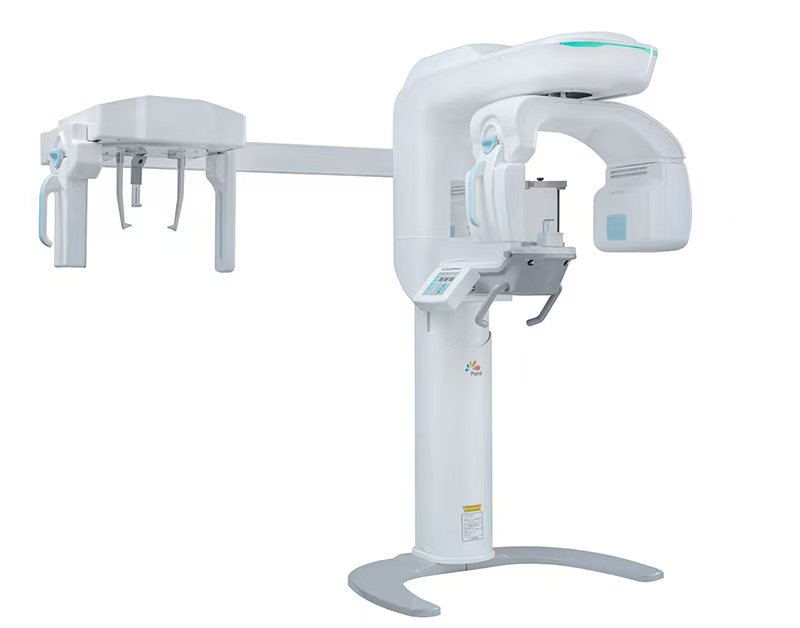
PointNix Point 800S HD 3D Plus dental CBCT — 3-in-1 imaging system with cephalometric arm, Super OLED panoramic sensor, and white body with Point logo on pillar
POINTNIX POINT 800S · HD 3D PLUS · 3-IN-1 SYSTEM Korea
The Korean dark horse — deployed in ·Middle East ·Southeast Asia ·South America ·Eastern Europe ·Africa
01
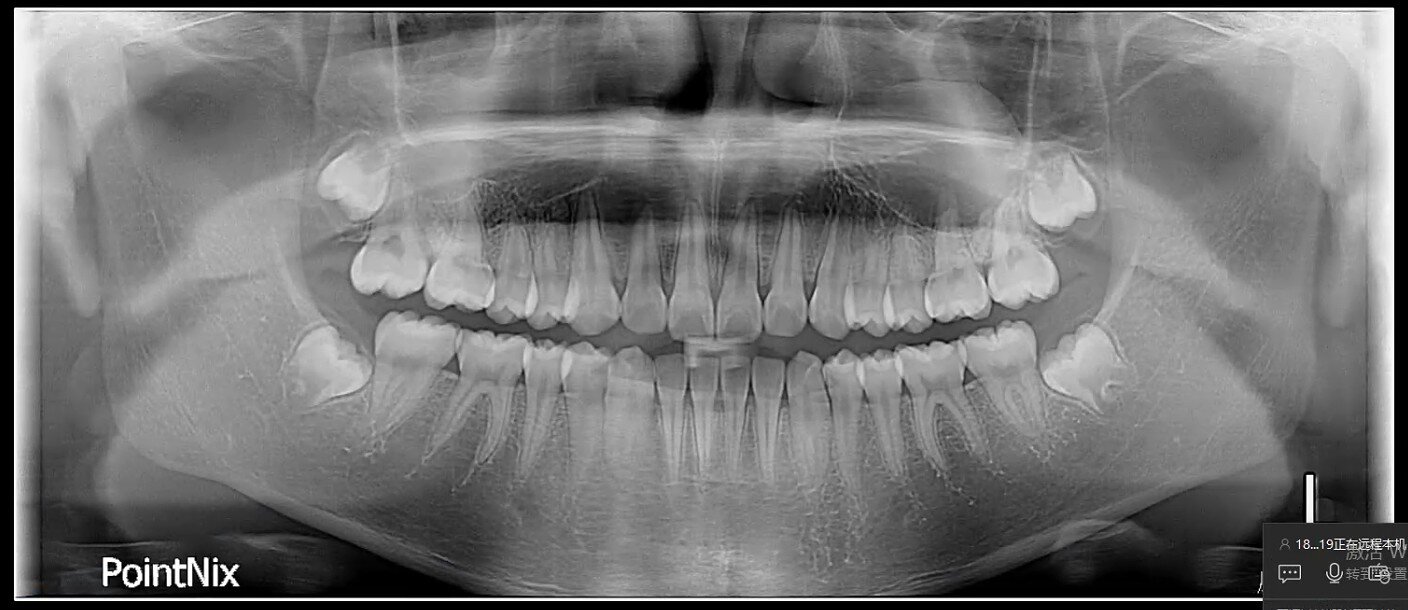
Sample clinical output

Why the sensor matters:
look at the detail.

An actual panoramic image produced by a Point 800S HD 3D Plus — note the sharpness of the root apices and crown margins. Sample DICOM files available by request.

Sample panoramic dental X-ray from PointNix Point 800S HD 3D Plus CBCT — full adult dentition showing clear roots, periodontal ligament space, third molars, mandibular canal and maxillary sinus floor. PointNix watermark visible.
Adult · Panoramic mode
Sensor: Super OLED (CdTe)
Exposure: 17 s
Pixel: 48 μm

Image from PointNix reference library, exported direct from RealScan III software.

02
The key differentiator

Super OLED sensor.
Direct conversion, not indirect.

Most dental panoramic and cephalometric sensors use a two-step process: X-rays strike a scintillator which converts them to visible light, which is then captured by CCD or CMOS photodiodes. PointNix's Super OLED sensor uses Cadmium Telluride (CdTe) — a direct-conversion semiconductor that turns X-ray photons straight into electrical signal, skipping the light-conversion step entirely.

Conventional

Indirect CCD / CMOS sensor

X-ray photons
Scintillator (light conversion)
↓ visible light (scatter)
CCD / CMOS photodiode
  • Two-step conversion: X-ray → light → electrical
  • Light scatters and overlaps across neighboring pixels
  • Effective X-ray absorption ~35%, requires more radiation
  • Standard for most competitor panoramic sensors
PointNix exclusive
SUPER OLED

Direct CdTe sensor

X-ray photons
CdTe layer · direct conversion
↓ direct electrical signal
Pixel readout matrix
  • Single-step conversion: X-ray → electrical (no light)
  • No scatter — each pixel captures its own signal cleanly
  • Manufacturer reports ~100% X-ray absorption vs ~35% for CCD/CMOS
  • Higher contrast image quality at lower radiation dose

X-ray absorption, side by side

Absorption percentages per PointNix product documentation.

Conventional CCD / CMOS
~35%
Super OLED (CdTe)
~100%
Higher absorption → lower required dose
No light scatter → sharper images
48 μm pixel pitch
12-bit A/D conversion

Honest note: the ~100% vs ~35% figures are published by PointNix and reflect theoretical absorption efficiency of the sensor material, not clinical outcome differences. In practice, panoramic image quality depends on the whole imaging chain (tube, collimation, processing). That said, direct-conversion sensors are a known and legitimate technical improvement over scintillator-based indirect sensors.

03
Certified Pre-Owned Process

Korean engineering, Shanghai QC.
Tested, calibrated, warrantied.

Pre-owned PointNix units are sourced primarily from Korean and Chinese clinics, then processed through our Shanghai refurbishment facility — with particular attention to the Super OLED sensor (a specialty part that needs careful handling).

01

Sourcing & Inspection

Units sourced from clinics upgrading or exiting the practice. Initial inspection verifies Super OLED sensor integrity, tube hour counter, mechanical condition, and absence of water or impact damage. Units with compromised sensors are rejected.

02

Sensor Testing

Super OLED panoramic sensor and amorphous silicon CT sensor individually tested for pixel defects, dynamic range and A/D conversion linearity. Results documented in the per-unit inspection report. This is unique to PointNix QC among our CBCT brands.

03

Mechanical & Imaging Cal.

Gantry rotation, pillar motion, chin rest/bite block all verified. X-ray tube output calibrated. Phantom scans validate all three modalities (pano / ceph / CT) and both FOV sizes (10×9, 12×9).

04

Software & Pack-out

Latest RealScan III software installed on the new workstation — configured and license-activated. Calibration reports archived. Custom crate built for transport with extra sensor protection.

What's included

  • Complete Point 800S HD 3D Plus gantry with Ceph arm
  • Super OLED panoramic/Ceph sensor (CdTe)
  • Amorphous silicon CT flat-panel sensor (detachable)
  • RealScan III imaging software — licensed
  • Dedicated PC workstation — new, pre-configured
  • Patient positioning accessories (chin rest, bite block)
  • Integrated touch panel + remote exposure control
  • Per-unit sensor & calibration reports
  • Custom shipping crate (sea or air freight ready)
  • 12-month warranty on main unit and both sensors
  • Remote installation support via video call

Honest disclosure

What pre-owned means specifically for PointNix:

  • PointNix is a smaller, specialist Korean dental imaging brand — much less international recognition than Vatech or Genoray.
  • This is both a downside (brand recognition, resale value) and an upside (lower entry price for genuine Korean-made hardware).
  • Production years of current stock typically range 2018–2023. Tube remaining life disclosed per unit, usually 75%+ on the units we select.
  • RealScan III software supports English and Korean; other language packs may need to be requested from PointNix.
  • PointNix international service network is limited — we are your primary service point for units sold through us.
  • Regulatory registration in your country is the buyer's responsibility. Some markets register PointNix directly; others may need import-as-refurbished routes.

Unit-specific inspection report and real photos shared before purchase confirmation.

Korean value play

Korean sensor tech — without the premium brand markup.

Used Vatech / Genoray 3-in-1: USD 22,000–45,000
Used PointNix 3-in-1: USD 18,000–30,000
Used MEYER 3-in-1 (China): USD 18,000–28,000

PointNix occupies the value sweet spot in our Korean offerings — real Korean engineering with unique sensor tech, without Vatech/Genoray brand premium.

04
3-in-1 + Modular CT sensor

Three modalities.
Upgradeable CT sensor.

The Point 800S HD 3D Plus combines digital panoramic, cephalometric and cone-beam CT in one chassis — with one architectural twist: the CT sensor is detachable and upgradeable, giving clinics a staged investment path.

/ PANO

Panoramic

17-second panoramic acquisition using the Super OLED CdTe sensor — the star of the show. Lower dose, higher contrast, sharper root apices.

Sensor
Super OLED (CdTe)
Pixel size
48 μm
Active area
150 × 4.8 mm
Scan time
17 s
/ 3D CT

Cone-Beam CT

19-second CBCT scan via amorphous silicon flat-panel detector. Two clean FOV sizes for dental-arch and slightly extended coverage without FOV-menu fatigue.

Sensor
a-Si flat panel
Pixel size
127 μm
A/D
14-bit
FOV
10×9 / 12×9 cm
Scan time
19 s
/ CEPH

Cephalometric

10-second cephalometric exposure — one of the fastest in our CBCT lineup. Uses the same Super OLED sensor as the panoramic mode, mounted on the Ceph arm.

Sensor
Super OLED (CdTe)
Active area
240 × 4.8 mm
Pixel size
48 μm
Scan time
10 s
Staged investment path

The CT sensor is detachable —
start without it, add it later.

PointNix designed the 3-in-1 with modular CT — meaning you can purchase a 2-in-1 (Pano + Ceph) configuration today and upgrade to full 3-in-1 later by adding the CT sensor, without replacing the whole unit.

Useful when: your initial case mix doesn't justify 3D imaging but you anticipate adding implants, orthognathics or airway workflows; when you want to spread the capital investment; or when you simply want the option to maintain/service the CT sensor independently.

2-in-1 at launch
Upgrade to 3-in-1 when ready
Sensor hot-swappable for service
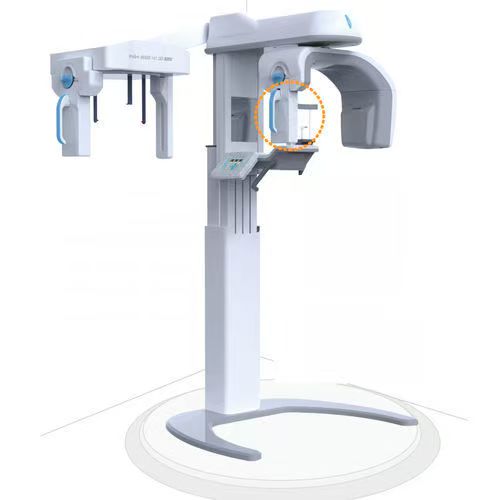
PointNix Point 800S HD 3D Plus product render with orange circle highlighting the detachable CT sensor module for the 2-in-1 to 3-in-1 upgrade path
Detachable CT sensor module — highlighted in orange
06
RealScan III Software

PointNix's own imaging suite.

Every unit ships with RealScan III — PointNix's native 3D imaging and analysis software. Designed specifically around this hardware, handling everything from volume rendering to implant simulation.

3D Volume Rendering

Full 3D visualization

Interactive 3D reconstruction for diagnosis and treatment planning. Rotate, slice, and isolate structures on the fly for consult presentations.

MAR

Metal Artifact Reduction

Algorithmic removal of streak artifacts from existing crowns, posts and implants — critical for re-treatment planning and post-implant evaluation.

Measurement Tools

Precise 3D measurements

Length, angle, anatomical landmarks and bone density measurements using 3D volumetric data rather than 2D projections.

Auto Bone Density

HU / density analysis

Automated bone density measurement in Hounsfield units — relevant for implant site selection and surgical difficulty estimation.

3D Implant Simulation

Virtual implant placement

Position virtual implants in the 3D volume, evaluate surrounding bone density and nerve proximity, generate treatment plans.

3D Endoscopy

Virtual internal view

Navigate through the virtual interior of bone and cavities — useful for visualizing canal anatomy and sinus pathology.

3D Cube

Full 360° reconstruction

One scan reconstructed into 3D at uniform resolution — view any angle without re-scanning.

Oblique Slice

Arbitrary-plane sectioning

Slice the volume at any angle, not just the standard axial/coronal/sagittal planes. Handy for following curved anatomical structures.

DICOM 3.0

Cross-system compatibility

Export studies in DICOM 3.0 for compatibility with third-party tools (Anatomage, Blue Sky Plan, OnDemand3D, etc.) and for radiologist referral.

Cross-sectional minimum slice: 0.1 mm · Voxel slice thickness max: 0.160 mm · Reconstruction: 10–40 seconds
07
Specifications

Technical datasheet.

Specifications from PointNix's official product documentation. Pre-owned units are verified against these values during QC at our Shanghai facility.

Request full datasheet on WhatsApp

Product Identity

Model
PointNix Point 800S HD 3D Plus
Type
3-in-1 dental imaging (Pano + Ceph + CBCT)
Manufacturer
PointNix Co., Ltd.
Country of origin
Korea (Seoul / Gyeonggi-do)

Super OLED Sensor (Pano & Ceph)

Sensor type
CdTe (Super OLED, direct conversion)
Scintillator
Super OLED (no indirect layer)
Pixel size
48 μm
A/D conversion
12-bit
Pano active area
150 × 4.8 mm
Ceph active area
240 × 4.8 mm

CT Sensor (Detachable / Upgradeable)

Sensor type
Amorphous Silicon flat panel
Scintillator
Amorphous Silicon
Pixel size
127 μm
A/D conversion
14-bit
FOV options
120 × 90 mm, 100 × 90 mm
Active area (12×9 FOV)
1,024 × 1,024 pixels
Active area (10×9 FOV)
1,024 × 640 pixels
Detachable
Yes (2-in-1 ↔ 3-in-1 upgrade)

Scan & Reconstruction

Panoramic scan
17 seconds
Cephalometric scan
10 seconds
CT scan
19 seconds
Reconstruction time
10 – 40 seconds
Voxel size (max)
0.160 mm
Min. cross-section slice
0.1 mm

X-Ray & Physical

Tube voltage
~100 kV
Tube current
~10 mA
CT dimensions (L×W×H)
1500 × 740 × 1820 mm
Cephalometric dimensions
1290 × 724 × 1840 mm

Software

Native software
RealScan III (PointNix)
File format
DICOM 3.0
Features
MAR, 3D volume, implant sim, bone density, 3D endoscopy

Specifications source: PointNix Point 800S HD 3D Plus product brochure. Final condition confirmed per unit during QC.

08
FAQ

Pre-owned buyer FAQ.

Why PointNix instead of Vatech or Genoray? +

Three honest reasons:

  1. Super OLED sensor. PointNix's CdTe direct-conversion technology is a legitimate technical advantage for panoramic and cephalometric image quality. Vatech and Genoray use different sensor architectures.
  2. Price. PointNix doesn't command the same brand premium — you're paying for the hardware, not the reputation. Used Point 800S HD 3D Plus is typically 20–30% cheaper than comparable used Vatech or Genoray 3-in-1.
  3. Upgrade path. The detachable CT sensor lets you staged-in the full 3-in-1 capability.

Three honest reasons against:

  1. Smaller brand = less regulatory clearance in some markets (check your country).
  2. Lower resale value if you ever upgrade or exit.
  3. Less third-party service availability outside Korea.

If you want the established brands instead, look at Genoray Papaya 3D Plus or Vatech Implagraphy.

Is the Super OLED sensor actually better? +

Direct-conversion X-ray detectors (CdTe, a-Se) are a well-established concept in medical imaging — used in cardiac catheterization labs, mammography, and high-end radiography for exactly the reasons PointNix advertises: better X-ray absorption, no light-conversion step, no photon scatter between pixels. The technology is real.

Whether you'll see a clinically meaningful difference vs a well-designed CCD/CMOS panoramic depends on patient, technique, and what you're diagnosing. For general dental work most clinicians won't see obvious differences. For detailed endodontic or periodontal evaluation, the sharper pixel-level contrast can matter.

The marketing claim of "twice better than other panoramics" is PointNix's own — we report it because they print it, but we're not endorsing the exact multiplier. The underlying physics of direct conversion is sound.

How do I verify the sensor works before payment? +

Sensor health is our #1 QC concern for PointNix — because the Super OLED sensor is a proprietary specialty part that's hard to replace. Before any deposit we share for the specific unit:

  • Per-pixel dark-field and flat-field test results (identifies dead or drifting pixels)
  • A/D conversion linearity verification across the exposure range
  • Live video of the unit performing a panoramic scan with sample DICOM export
  • Sample DICOM file for you or your radiologist to open in any viewer
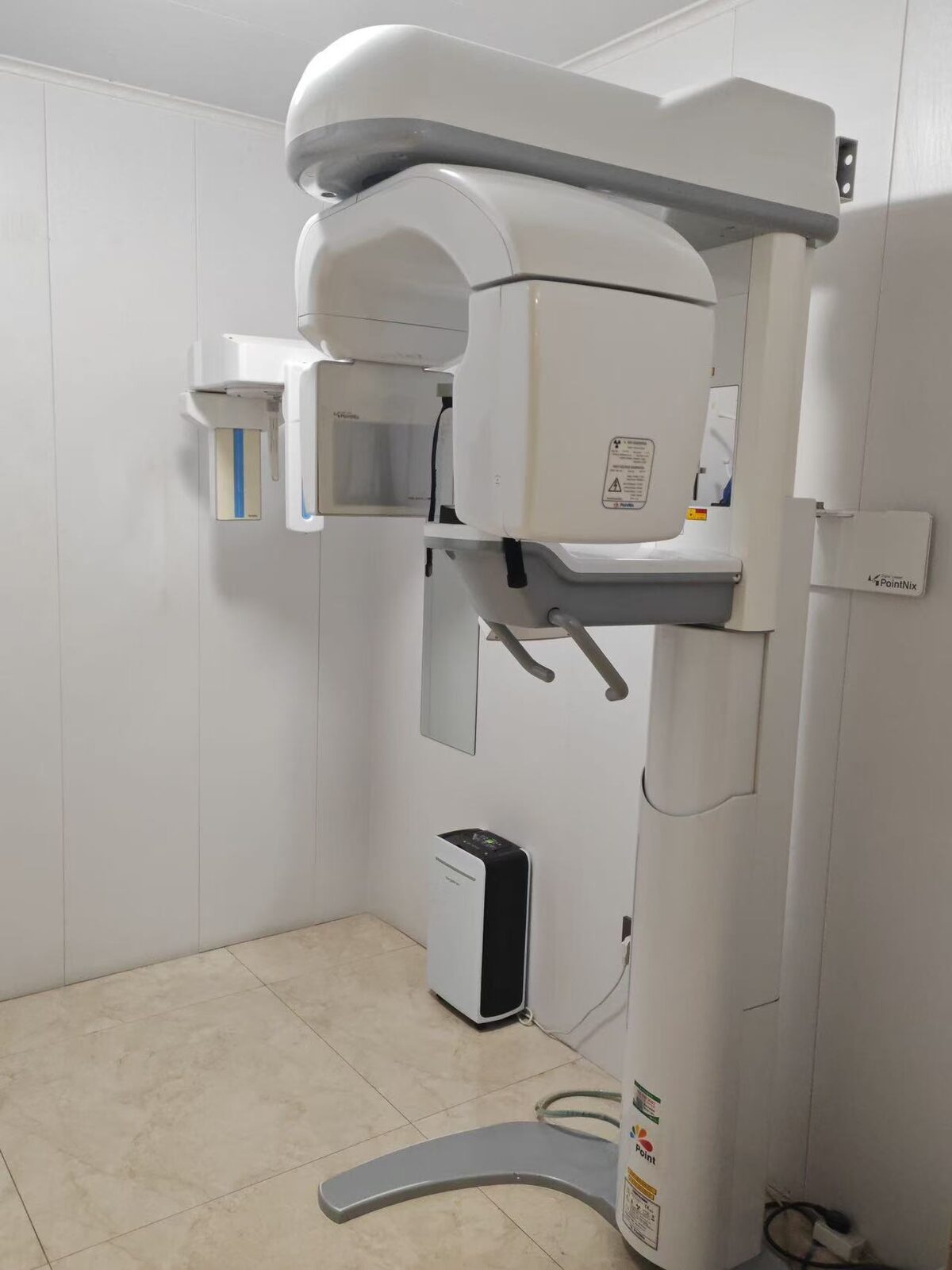
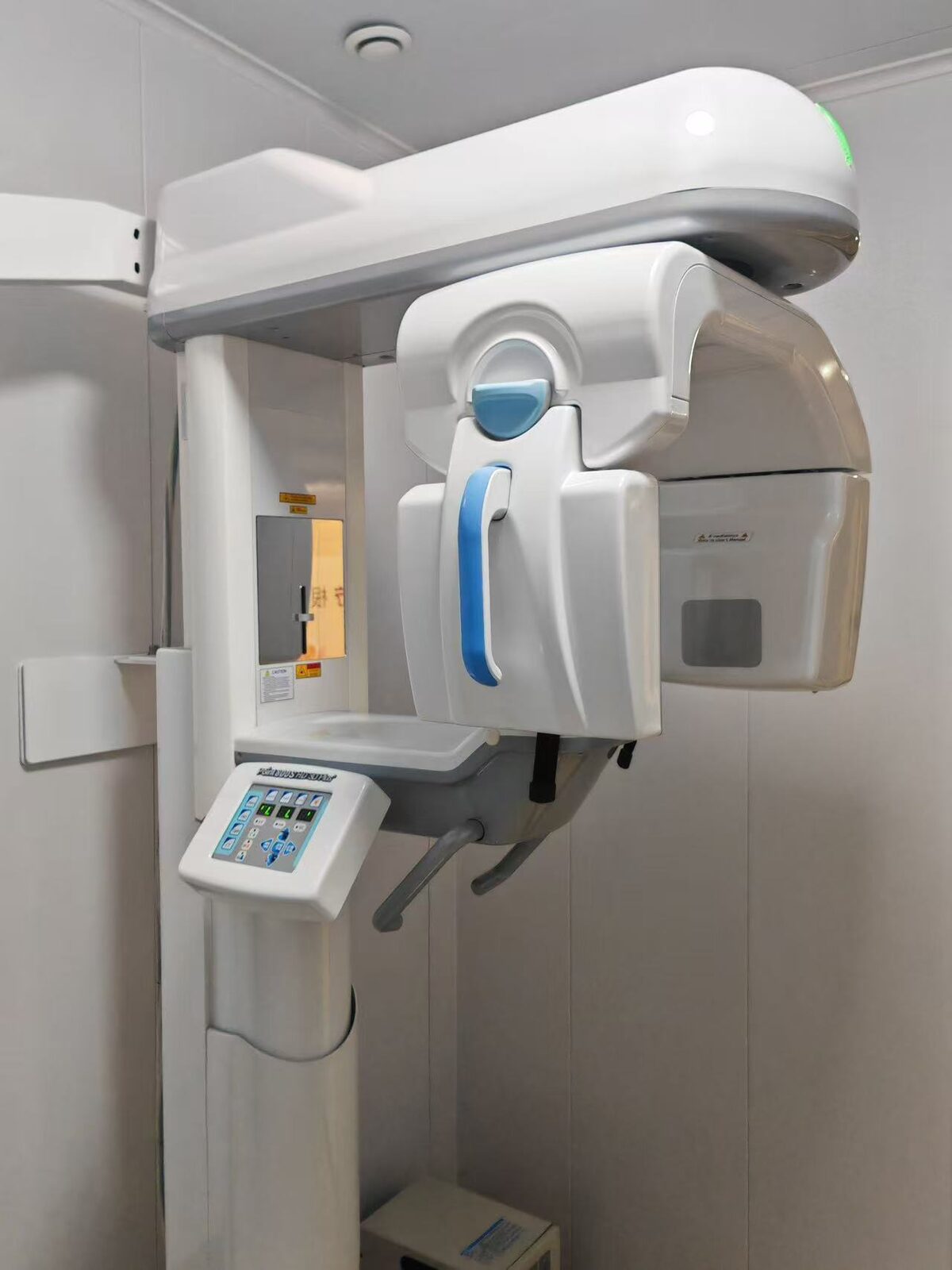
  • High-resolution photos of the unit (real, not renders)
  • Service history and tube hours reading
Can I buy the 2-in-1 version first and upgrade later? +

Yes — PointNix's product line includes the Point 800S HD Plus (Pano + Ceph only) as a 2-in-1 configuration that can be upgraded to 3-in-1 by adding the CT sensor later. We occasionally stock these 2-in-1 units at even lower pricing. Ask us if you want to start there. Just note that upgrading later means a second transaction (sensor cost + installation labor) — if you already know you want CT, buying the 3-in-1 today is typically more cost-effective overall.

What warranty and service do you provide? +

12 months parts warranty on main gantry, Super OLED sensor, and CT sensor from installation. Free replacement parts during warranty (buyer covers shipping). 24/7 remote diagnostics via TeamViewer/AnyDesk. We stock the most common PointNix wear parts in Shanghai. Note that the Super OLED sensor itself is a specialty item — failure is rare but replacement can take 2–4 weeks to source from Korea.

Country registration — is PointNix approved in my market? +

PointNix has registrations in Korea and several international markets including parts of the Middle East, Southeast Asia, and Eastern Europe. US FDA, EU MDR, and some Latin American registrations may be incomplete — this is a smaller manufacturer than Vatech/Genoray. Tell us your country when you inquire and we'll give you a realistic read on what's available. For markets without direct PointNix registration, refurbished import pathways are sometimes possible.

What's the pricing and payment terms? +

Certified pre-owned Point 800S HD 3D Plus typically ranges USD 18,000–30,000 FOB Shanghai — depending on production year, tube hours, sensor condition, and workstation specification. 2-in-1 (Pano + Ceph) configurations are available at lower price points. Standard payment: 30% deposit after documentation review, 70% before shipment. T/T preferred; L/C at sight accepted. Multi-unit orders receive volume pricing.

Installation and training? +

Remote installation support is included — our engineers guide your local technician via video call for physical assembly, software installation, sensor calibration verification, and training on RealScan III. PointNix installation is slightly more delicate than simpler single-modality units because of the Ceph arm alignment and detachable CT sensor seating. On-site installation by our engineers available for additional cost if you prefer hands-on setup.

09
Get a quote

One message is all it takes.

WhatsApp is the fastest way to talk to us — usually a same-hour reply on business days. Include your country, preferred configuration (3-in-1 or 2-in-1), quantity, and any questions about sensor condition or regulatory requirements.

Showroom & warehouse
Shanghai Carejoy Dental Co., Ltd. — Shanghai, China
Visits by appointment · multiple units in stock