Sourcing a CBCT for a Nigerian Dental Hospital: Lagos Import Guide, NAFDAC, and Real FOB Pricing
How a dental and maxillofacial hospital in Nigeria imports a CBCT unit from Shanghai — covering FOV choice for maxillofacial surgery, Apapa/Tin Can port logistics, NAFDAC and SONCAP registration, FX challenges, and realistic all-in pricing.
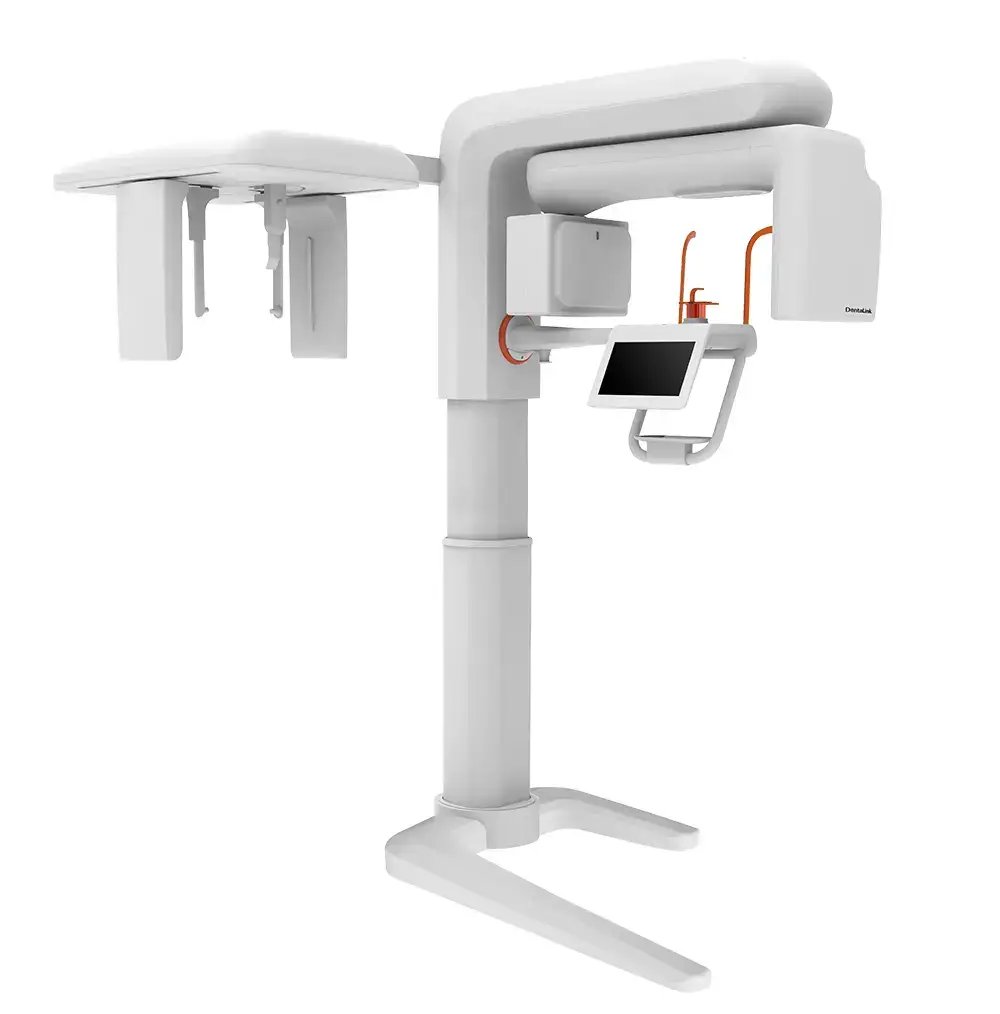
Nigeria's private dental hospital sector is growing faster than almost any other market in sub-Saharan Africa. Maxillofacial centers in Lagos, Abuja, and Port Harcourt are expanding from panoramic imaging to full 3D cone-beam CT, driven by growth in implantology, orthognathic surgery, and the country's maturing medical tourism outbound-to-inbound inversion. A recent inquiry from a Nigerian dental & maxillofacial centre captures the typical scope: a mid-sized private hospital, evaluating CBCT for the first time, needing end-to-end guidance from FOV selection through NAFDAC registration to FX settlement. This guide walks through that journey in concrete terms.
"I am the managing partner of a dental and maxillofacial centre in Nigeria. I want to make enquiries on purchasing a CBCT machine for our Dental hospital."
— Dental & maxillofacial centre in Nigeria (contact on file)
Why FOV selection matters more for maxillofacial centers
A general dentist can often work happily with a 5×5 cm or 8×5 cm field of view — enough to capture a single arch for implant planning. A maxillofacial center has a different problem. Orthognathic case planning, TMJ assessment, third-molar extractions with close inferior alveolar nerve proximity, and trauma cases all benefit from — or require — a larger FOV.
For a dental and maxillofacial hospital, the pragmatic FOV recommendation is 16×10 cm or larger. This captures the full dentition plus the TMJ and inferior alveolar nerve canal in a single scan. The marginal cost uplift over a smaller-FOV unit is meaningful (USD 4,000–9,000 in refurbished markets, USD 15,000+ new) but the case breadth it unlocks justifies the spend within 12–18 months for a hospital seeing 200+ new patient consultations per month.
Platform shortlist for Nigerian maxillofacial centers
Refurbished and new platforms we regularly quote to Nigerian hospitals, ranked by total value for a multi-operator facility:
- Vatech PaX-i3D Smart (17×15 FOV): The workhorse. Refurbished units land at USD 38,000–48,000 FOB Shanghai. Excellent detector panels, robust service network, Korean-origin with documented calibration history.
- Planmeca ProMax 3D Mid (16×9 FOV): Strong 3D image quality, refurbished USD 42,000–52,000 FOB. European preference, larger installed base in West Africa through French distribution.
- Carestream CS9300 Select (17×13.5 FOV): Common in UK/EU dental hospitals, refurbished USD 45,000–55,000 FOB. Strong multi-modality workflow.
- New 4-in-1 CBCT platform from Shanghai factory partners (16×17 FOV): New-in-box units at USD 28,000–38,000 FOB Shanghai with 3-year warranty — attractive for hospitals prioritizing warranty coverage over established brand recognition.
Shipping Shanghai → Lagos: ports and timelines
Nigeria's primary container ports are Apapa (Lagos) and Tin Can Island (Lagos) for the south, and Onne (Port Harcourt) for the Niger Delta. The overwhelming majority of CBCT shipments land at Apapa or Tin Can. Expect:
- Shanghai → Lagos (Apapa) via Durban or Algeciras: 35–48 days port-to-port
- Customs clearance at Apapa: 7–21 business days (highly variable — this is Nigeria's bottleneck)
- Inland transport Lagos → Abuja or Port Harcourt: 2–4 days
The Apapa customs variance is real. A clearance that takes a well-connected importer 5 business days can take a first-time importer 3 weeks or more. We strongly recommend working with a licensed customs broker with a dedicated desk at the port — we can refer 2–3 partners who handle medical device imports specifically and can navigate both the NAFDAC Form M process and the SONCAP conformity certification in parallel.
NAFDAC registration and SONCAP certification
Nigeria regulates medical devices through the National Agency for Food and Drug Administration and Control (NAFDAC), with conformity assessment through SONCAP (Standards Organisation of Nigeria Conformity Assessment Programme). CBCT equipment classification is Medical Device Class IIb. The registration process:
- Manufacturer appoints a Nigeria-based authorized representative (mandatory — the importer typically holds this role)
- Submit technical file: CE certificate, ISO 13485 factory certificate, device master file, labeling, IFU in English
- NAFDAC conducts dossier review and may request additional testing — timeline 60–120 days
- Form M (Import Mandate) processed through Central Bank of Nigeria's Trade Monitoring System prior to shipment
- SONCAP Certificate of Conformity issued by a SON-accredited inspection body (Intertek, SGS, Bureau Veritas) before vessel departs Shanghai
Factor 4–6 months of lead time for first-time NAFDAC registration if the device isn't already listed. Repeat imports of a registered device under the same manufacturer and importer take days, not months.
FX and payment: the real Nigerian challenge
Foreign exchange access for medical equipment imports is the single biggest friction point in Nigerian procurement. The official USD/NGN rate and the parallel market rate frequently diverge, and the Central Bank of Nigeria's FX allocation windows for medical imports have tightened since 2022. Practical implications:
- Hospitals with NGN-denominated revenue should assume a 15–25% FX spread premium on landed cost vs. what the FOB quote in USD implies — budget accordingly
- Letter of Credit (LC) settlement through a Nigerian bank (GTBank, Zenith, UBA, Access) is preferred by most suppliers for first-time buyers because it routes the FX allocation through official channels
- Hospitals generating USD revenue (private pay international patients, diaspora remittances, medical tourism) have a structural advantage — domiciliary accounts reduce FX exposure significantly
Customs duties and all-in landed cost
Nigerian customs duty on dental CBCT (HS 9022.14) is typically 5% plus 7.5% VAT on CIF value. Additional charges include 1% CISS (Comprehensive Import Supervision Scheme), 0.5% ETLS (ECOWAS Trade Liberalization Scheme), and port terminal handling. A worked example for a USD 42,000 FOB CBCT:
- FOB Shanghai: USD 42,000
- Ocean freight + insurance to Apapa: USD 3,800
- CIF Apapa: USD 45,800
- Customs duty 5%: USD 2,290
- VAT 7.5%: USD 3,607
- CISS + ETLS + port charges: USD 900
- NAFDAC/SONCAP fees: USD 600
- Inland transport to clinic + installation: USD 1,200
- All-in landed cost: ~USD 54,397
Factor a further 10–20% FX spread if settling from NGN-denominated accounts. Most Nigerian hospital CFOs we work with budget landed cost at 1.35× FOB quote for first imports, tightening to 1.25× on subsequent repeat orders once the NAFDAC registration is in place and the customs broker relationship is established.
Power, environment, and service
Nigerian grid stability is the other major practical consideration. Lagos and Abuja clinics are increasingly served by dedicated solar-plus-inverter systems or diesel gensets. A 16×17 FOV CBCT draws ~3–4 kVA during acquisition. Specify an online UPS of 8–10 kVA with 30-minute autonomy to tolerate grid transitions, plus a dedicated voltage regulator rated for 180–260V input to 230V output. Budget USD 2,500–4,500 for UPS and regulator infrastructure.
Humidity and dust are real factors in coastal Lagos. Specify air-conditioned imaging rooms at 22–26°C with 40–60% relative humidity — your manufacturer's operating environment specification must be met to preserve detector panel life. Service support for Nigerian hospitals is typically routed through regional South African partners for annual calibration and via direct shipment of replacement parts from Shanghai (3–5 day DHL/FedEx) for urgent repairs.
Running a CBCT procurement for a Nigerian hospital?
Send us your hospital's specifications — case volume, FOV needs, existing imaging infrastructure, budget range, and target port — and we'll build an FOB quote tailored to Nigerian import realities, including NAFDAC timeline estimates and a shortlist of licensed customs brokers we've worked with successfully.
Chat on WhatsApp →Have a specific unit in mind?
Tell us which model you want and your destination port — we'll quote FOB or CIF with a video demo of the actual unit in our warehouse.