CBCT Voxel Size and Resolution: 75µm, 100µm, 150µm, 200µm Selection Framework
How dental practices select CBCT voxel size for clinical purpose — 75µm high-resolution for endodontic specialty, 100µm for implant planning, 150µm standard clinical, 200µm and 300µm for orthodontic and large FOV screening. Dose tradeoffs, data volume implications, protocol library design, and FOB Shanghai pricing across CBCT tiers.
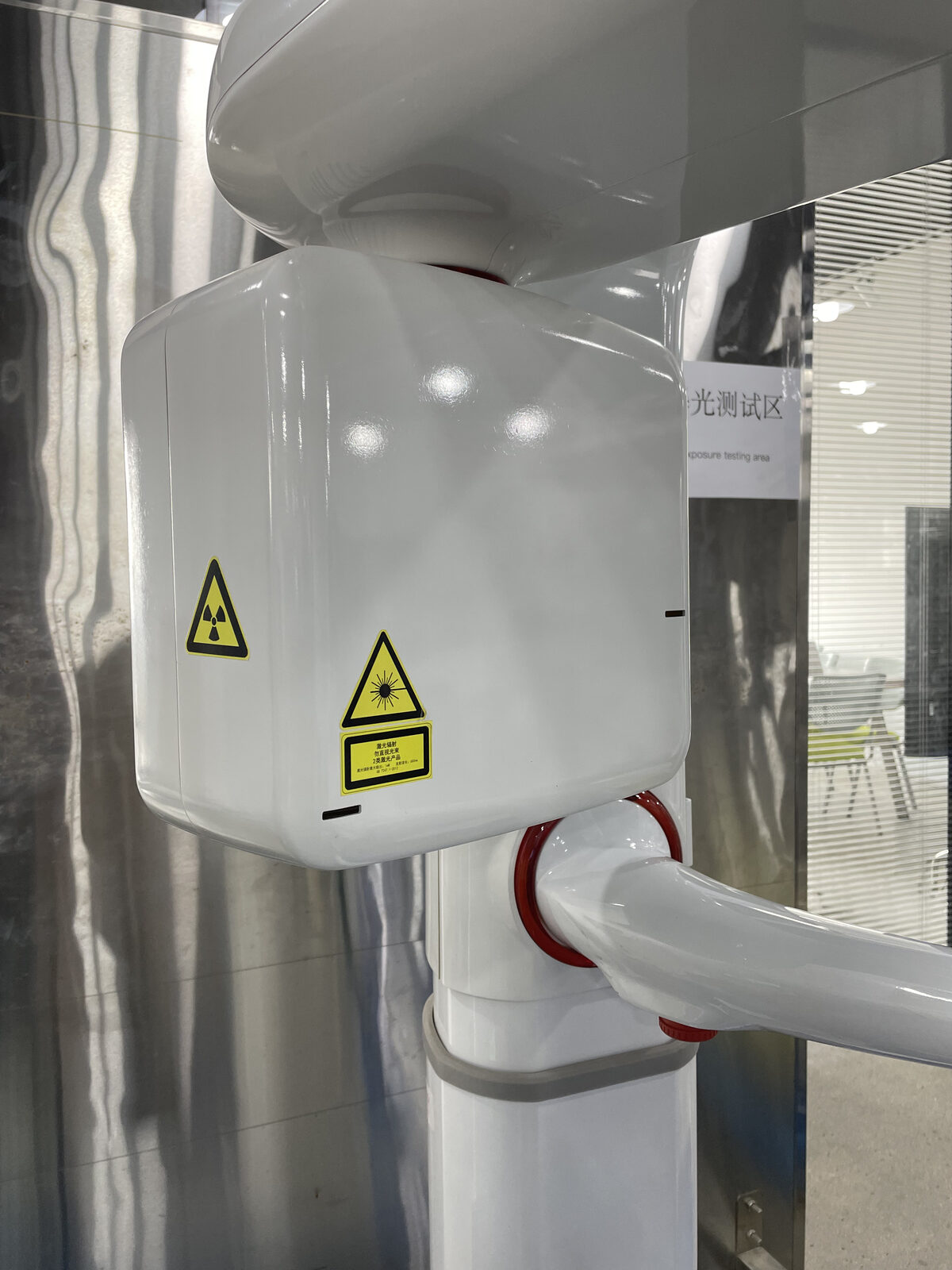
CBCT voxel size — the dimension of each volumetric pixel in the reconstructed 3D image — is one of the most consequential specifications in CBCT procurement and daily clinical use. Voxel size directly determines image detail resolution, but it trades off against scan field-of-view size, radiation dose, scan time, and storage load. Understanding the voxel size spectrum (typically 75µm to 400µm in modern CBCT) and matching voxel selection to clinical purpose distinguishes a useful imaging workflow from a wasteful one. This guide walks through voxel size selection, clinical implications, and equipment specification considerations for practices sourcing CBCT from Shanghai.
What voxel size actually means
A CBCT voxel is the 3D equivalent of a 2D pixel: a cubic sample in the reconstructed volume representing a single measured density at a single spatial location. Voxel size is typically expressed as a single dimension (75, 100, 150, 200, 300, 400 µm) because CBCT voxels are usually isotropic (equal dimensions in all three axes). Smaller voxel = finer spatial detail visible in the reconstruction. Practical implications:
- Spatial resolution: the smallest structure a CBCT can resolve is approximately 2× voxel size due to partial volume effects. A 100µm voxel CBCT resolves structures approximately 200µm (0.2mm) minimum.
- Data size: halving voxel size (e.g. 200µm to 100µm) in 3D increases data volume by 8×
- Scan dose: smaller voxel typically requires higher dose to maintain acceptable signal-to-noise ratio
- Reconstruction time: smaller voxel reconstructions take substantially longer
- Scan time: some CBCT units require longer rotation time for small-voxel high-resolution protocols
The voxel size spectrum and clinical applications
75µm voxel (high resolution)
- Resolves structures: approximately 0.15mm minimum
- Typical FOV: small, 5×5cm or 8×8cm (limited by data volume and dose)
- Clinical applications:
- Endodontic diagnosis — accessory canal detection, vertical root fracture
- Implant planning in esthetic zone where 100µm accuracy matters
- Periapical pathology fine detail
- Periodontal bone architecture fine detail
- Scan time penalty: often longer scan time (20–40s) to accumulate signal
- Dose penalty: 1.5–3× higher dose than 150µm scan at equivalent noise
- Availability: premium mid-tier and premium CBCT only; entry-tier CBCT rarely offers 75µm protocol
100µm voxel (standard high-resolution)
- Resolves structures: approximately 0.2mm minimum
- Typical FOV: small to medium, 8×8cm to 10×10cm
- Clinical applications:
- Mainstream implant planning
- Endodontic diagnosis (acceptable resolution for most endodontic indications)
- Third molar assessment
- Cyst and small pathology characterization
- Anterior orthodontic assessment
- Scan time: 10–20 seconds typical
- Availability: standard on mid-tier CBCT; widely available
150µm voxel (balanced)
- Resolves structures: approximately 0.3mm
- Typical FOV: medium, 10×10cm to 12×9cm
- Clinical applications:
- Standard implant planning (non-esthetic zone)
- Sinus lift evaluation
- Mandibular canal visualization for surgical planning
- Comprehensive orthodontic records
- General dental screening
- Sweet spot: most commonly used voxel size in mainstream practice
- Dose: balanced dose profile
200µm voxel (low-dose / large FOV)
- Resolves structures: approximately 0.4mm
- Typical FOV: medium to large, 12×9cm to 16×10cm
- Clinical applications:
- Orthodontic treatment planning (full-face craniofacial analysis)
- Airway and TMJ imaging
- Large pathology screening
- Pediatric CBCT (dose-conscious applications)
- Dose advantage: substantially lower than 100µm protocols
300µm–400µm voxel (ultra-low-dose / large FOV)
- Resolves structures: approximately 0.6–0.8mm
- Typical FOV: large, 17×13cm or larger
- Clinical applications:
- Comprehensive orthodontic records in growing patients (dose-sparing priority)
- Large-volume screening scans
- Airway and OSA screening
- Orthognathic surgical planning overview
- Limitation: inadequate for detailed implant or endodontic work; use as overview then rescan at higher resolution if needed
Voxel size vs. FOV tradeoffs
Most CBCT machines offer a range of FOV/voxel combinations. The core tradeoff:
- Small FOV + small voxel: high-resolution targeted imaging (e.g. 5×5cm at 75µm for endodontic tooth)
- Large FOV + large voxel: overview imaging at lower dose (e.g. 16×10cm at 200µm for orthodontic records)
- Medium FOV + medium voxel: balanced (e.g. 10×10cm at 150µm for implant planning)
- Small FOV + large voxel: dose-sparing targeted scan when fine detail not needed (e.g. 5×5cm at 200µm for general pathology assessment)
- Large FOV + small voxel: maximum data; high dose and long reconstruction. Rarely clinically justified.
Data volume and storage implications
Storage and workflow implications of voxel selection:
- 75µm, 8×8cm scan: approximately 350–500 MB DICOM set
- 100µm, 10×10cm scan: approximately 200–350 MB
- 150µm, 12×9cm scan: approximately 120–200 MB
- 200µm, 16×10cm scan: approximately 100–170 MB
- 300µm, 17×13cm scan: approximately 60–100 MB
Annual storage load for a practice acquiring 300 CBCT scans per year ranges from approximately 30GB (all 300µm screening) to 150GB (all 75µm high-detail). Plan server and backup infrastructure accordingly.
Protocol library and programmed voxel selection
Modern CBCT machines typically offer 8–30 pre-programmed protocols combining specific FOV, voxel size, kVp, mAs, and scan time settings for defined clinical applications. Example protocol library on a mid-tier Chinese CBCT:
- Endodontic HD: 5×5cm FOV, 75µm voxel, 90 kVp, 8 mA, 14 second scan
- Single-tooth implant: 8×8cm FOV, 100µm voxel, 90 kVp, 10 mA, 16 second scan
- Multi-tooth implant: 10×10cm FOV, 150µm voxel, 90 kVp, 10 mA, 16 second scan
- Full-arch implant: 12×9cm FOV, 150µm voxel, 90 kVp, 12 mA, 18 second scan
- Orthodontic records: 16×10cm FOV, 200µm voxel, 85 kVp, 8 mA, 14 second scan (lower dose protocol)
- TMJ bilateral: 12×9cm FOV, 150µm voxel, 90 kVp, 10 mA, 16 second scan
- Airway/OSA: 17×13cm FOV, 300µm voxel, 85 kVp, 6 mA, 12 second scan (large FOV, low dose)
- Pediatric: reduced protocol at approximately 60% of adult dose parameters
Voxel uniformity vs. isotropic voxel
- Isotropic voxel: equal dimensions in X, Y, Z (standard for modern CBCT)
- Anisotropic voxel: legacy technology with different slice thickness (Z) than in-plane (X, Y) dimensions
- Clinical importance: isotropic voxels allow multi-planar reconstruction (MPR) at equal resolution in any orientation; anisotropic voxels degrade off-axis reconstruction. Always specify isotropic voxel for clinical CBCT.
Voxel size and dose: the DAP relationship
Dose-area product (DAP) and equivalent effective dose scale approximately with:
- Imaging volume (FOV area) linearly
- Voxel count inversely (smaller voxel = more voxels at same FOV = higher effective dose density)
- kVp and mAs per manufacturer technique factors
Practical implication: a 75µm 8×8cm scan can deliver 2–4× the effective dose of a 150µm 8×8cm scan of the same volume. Match voxel to clinical need; don’t scan high-resolution just because the capability exists.
Voxel size and Chinese CBCT tiers
Entry-tier Chinese CBCT (USD 18,000–32,000 FOB)
- Typically offers 150µm, 200µm, 300µm voxel options
- Minimum voxel 150µm on some entry units
- Adequate for implant planning, general diagnostic use
- Not suitable for high-resolution endodontic specialty imaging
Mid-tier Chinese CBCT (USD 32,000–55,000 FOB)
- Offers 100µm, 125µm, 150µm, 200µm, 300µm voxel range
- Comprehensive protocol library
- Adequate for all mainstream applications including specialty endodontic
Premium Chinese CBCT (USD 55,000–85,000 FOB)
- Offers 75µm, 100µm, 125µm, 150µm, 200µm, 300µm full range
- HD protocols with optimized reconstruction for high-resolution detail
- Suitable for specialty clinical applications, research, teaching
Voxel selection mistakes to avoid
- Always scanning at minimum voxel: “smallest voxel = best image” is incorrect. Dose and data volume increase substantially; clinical yield doesn’t
- Never scanning at minimum voxel when indicated: equally wrong — endodontic and implant precision require appropriate high-resolution protocol
- Ignoring pediatric voxel adjustment: pediatric CBCT should use larger voxel (200µm or larger) for dose reduction; adjusting voxel downward creates unnecessary radiation exposure
- Not matching voxel to FOV: small FOV with large voxel is under-utilizing capability; large FOV with small voxel is wasting dose
- Not training operators on voxel selection: many practices default to one protocol for all cases, missing the clinical optimization opportunity
Operator protocol selection training
Effective voxel utilization requires operator (dentist or radiology technologist) training:
- Case-appropriate protocol selection: matching protocol to clinical indication (endodontic vs implant vs orthodontic vs general diagnostic)
- Dose awareness: understanding that higher-resolution = higher dose, choose accordingly
- Patient factor adjustment: pediatric, adult, large-patient adjustments
- Quality check: review reconstructed images and identify whether voxel selection was appropriate
- Continuous education: as clinical applications and evidence evolve, protocol selection should update
Voxel specification when procuring CBCT
Specification questions to ask CBCT vendors:
- What voxel sizes are available across the machine’s protocol library?
- What is the minimum isotropic voxel size?
- Is voxel selection user-configurable, or only pre-programmed protocols?
- What scan time and dose are associated with each voxel size option?
- Does the reconstruction maintain full voxel resolution, or is post-reconstruction down-sampling applied?
- Are voxel size changes limited to certain FOV sizes?
- What is the computational hardware requirement for reconstruction at minimum voxel?
Sourcing CBCT from Shanghai with the right voxel capability?
WhatsApp us with your practice specialty (implant, endodontic, orthodontic, general), expected case mix, destination country, and budget. We’ll propose CBCT options matched to the voxel resolution range you actually need, walk through protocol library depth, discuss FOV-voxel tradeoffs for your clinical mix, and quote FOB Shanghai pricing with full commissioning package landed cost analysis.
Chat on WhatsApp →Have a specific unit in mind?
Tell us which model you want and your destination port — we'll quote FOB or CIF with a video demo of the actual unit in our warehouse.