Intraoral Scanners for Argentine Dental Clinics: Buenos Aires Sourcing with USD Settlement
How Argentine dental clinicians source intraoral scanners from Shanghai — covering peso/USD parallel-rate settlement, SIRA import approval, ANMAT registration, Buenos Aires air freight, and Spanish-language clinical support.
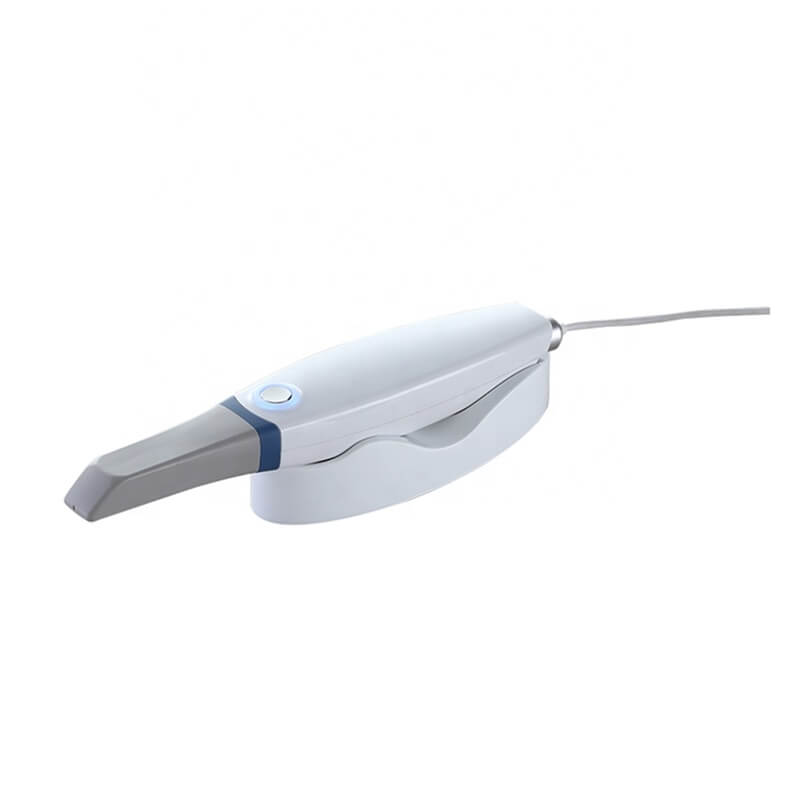
Argentine and broader Southern Cone dental practice is sophisticated, digital-forward, and economically sensitive in ways that shape intraoral scanner sourcing decisions distinctly from North American or European markets. Buenos Aires, Córdoba, Rosario, and Mendoza house mature private dental sectors with strong CAD/CAM adoption rates, but chronic peso instability and import restrictions make international equipment purchases genuinely complex. Recent inquiries from Argentine clinicians asking about intraoral scanners — in Spanish, with specific questions about pricing and specifications — capture the current market shape. This guide walks through IOS sourcing for Argentine clinical practice, including peso/USD settlement considerations, ANMAT registration, and Buenos Aires landed cost.
"Hola, necesito saber precio de scanner intraorales, especificaciones."
["Hi, I need to know the price of intraoral scanners, specifications."]
— Dental clinician in Argentina (contact on file)
The Argentine dental imaging market
Argentina has roughly 46 million residents and an estimated 42,000 practicing dentists as of 2024, one of the highest dentist-to-population ratios globally. Private practice concentration in Buenos Aires (especially CABA, Palermo, Recoleta, Belgrano neighborhoods plus Gran Buenos Aires), Córdoba capital, and Rosario. Market characteristics that shape IOS selection:
- Peso instability drives USD-pegged pricing for imported dental equipment — nearly all international transactions settle USD cash at parallel ("blue") rate rather than through official bank channels
- Import restrictions via SIRA/SEDI (Sistema de Importaciones de la República Argentina) add administrative complexity. Medical equipment has historically received relatively prompt SIRA approvals vs. consumer goods but nothing is automatic.
- ANMAT (Administración Nacional de Medicamentos, Alimentos y Tecnología Médica) is the medical device regulator, substantial but not prohibitive for dental IOS
- Clinical sophistication is high — Argentine dentists are typically trained on European curricula and expect IOS performance matched to Medit/3Shape benchmarks
IOS platforms that work for Argentine clinical practice
The Argentine market price sensitivity favors Chinese mid-tier IOS platforms over European premium options, but clinical quality expectations are high. The sweet spot:
- Launca DL300P: USD 4,800–6,500 FOB Shanghai. 30–35 µm full-arch, autoclavable tip, open STL export, Exocad + 3Shape integration via DME. Clinically acceptable for vast majority of Argentine prosthetic workflow. Spanish-language software interface available.
- Shining 3D Aoralscan 3: USD 6,500–8,500 FOB Shanghai. 25–30 µm full-arch, integrated AI tissue removal, stronger software ecosystem. Spanish-language firmware and documentation.
- Panda IOS P2: USD 5,500–7,500 FOB. Strong in orthodontic workflows, Spanish-language support.
For an Argentine clinic commissioning its first IOS, the Launca DL300P at the entry tier or Shining Aoralscan 3 at the mid-tier produce the best Argentina-specific value. Both are well-established in the Latin American market with local clinical reference customers.
Peso, USD, and settlement reality
Settlement to Chinese suppliers from Argentina in 2026 practically requires USD routing. The peso’s volatility makes direct ARS international transfer unfeasible. Practical payment routes:
- USD wire transfer from personal dollar account: Argentine dentists holding USD in personal accounts (very common in 2026) wire directly to Chinese supplier’s CNY or USD account. Cleanest path; minimal friction.
- USD cash payment through importer: Buenos Aires dental equipment importers accept USD cash from local buyers and handle international settlement to Chinese suppliers on behalf. Standard margin for this service: 4–8% above FOB + freight + duties.
- Crypto settlement (USDT, USDC): growing in use since 2023. Argentine buyer acquires USDT locally via regulated exchange (Lemon, Ripio, Bitso), transmits to Chinese supplier’s OTC partner, who converts to CNY. Settlement in hours rather than days.
Typical payment terms for Argentine IOS purchases: 50% deposit at order confirmation, 50% against shipping notification before air freight departure. Chinese suppliers rarely extend open-account terms to Argentine clinics without established trade history.
Shipping Shanghai to Buenos Aires
Argentina’s primary container port is Buenos Aires (Puerto Nuevo + Dock Sud terminals); secondary port Zarate for northbound cargo. Air freight through Ministro Pistarini (EZE) airport. For intraoral scanners:
- Air freight Shanghai to Buenos Aires (EZE) via Sao Paulo or Miami: 8–12 days including consolidation, USD 6–9 per kg. A single packaged IOS at 12–18kg including carry case runs USD 90–165 air freight.
- Ocean freight Shanghai to Buenos Aires: 35–48 days via Suez Canal routing. USD 2,200–3,400 for 20ft LCL containers; generally unjustified for single-unit IOS purchases.
- Customs clearance at Buenos Aires: 5–14 business days for medical equipment with ANMAT documentation
ANMAT registration path
Argentina regulates medical devices through ANMAT (Administración Nacional de Medicamentos, Alimentos y Tecnología Médica). Intraoral scanners classify:
- Intraoral scanners: Class II (moderate risk). Requires ANMAT product registration (RPPT — Registro de Productos para la Salud), device master file, Spanish-language IFU, and local representative agreement.
- First-time registration timeline: 6–10 months for Class II dental devices
- Required documentation: manufacturer ISO 13485, CE marking, clinical evaluation data, Spanish-translated IFU and labels
- For single-unit personal clinical imports by practicing dentists: simplified customs declaration is typically acceptable without requiring full ANMAT registration, though specific provisions vary by customs inspector discretion
SIRA/SEDI import approval
Argentina requires pre-shipment SIRA (Sistema de Importaciones) approval for most international imports since late 2022. For medical equipment:
- SIRA application filed before placing the international order, typically through customs broker or accountant
- Medical equipment generally receives SIRA approval within 10–45 days, though approval timelines have varied substantially by political cycle
- Single-unit clinical imports under certain threshold values (historically around USD 5,000) may qualify for simplified SEDI (Sistema Especial de Declaraciones Informativas) rather than full SIRA
- A Buenos Aires customs broker with medical equipment experience is essential for first-time Argentine importers
Duty, VAT, and landed cost
Argentine customs duty on intraoral scanners (HS 9018.49): typically 14% duty (MERCOSUR common external tariff), plus 21% IVA (Impuesto al Valor Agregado), plus various statutory fees (tasa estadística 0.5%, anticipo IIBB 1.5%, percepción ganancias 6%). Cumulative tax burden approximately 45–55% of CIF value. Worked example for a Launca DL300P at USD 5,200 FOB:
- FOB Shanghai: USD 5,200
- Air freight to Buenos Aires: USD 140
- Insurance: USD 25
- CIF Buenos Aires: USD 5,365
- Import duty 14%: USD 751
- IVA 21% on CIF + duty: USD 1,284
- Statutory fees, anticipo, percepción: approximately USD 450
- Broker, port, inland to clinic: USD 280
- All-in landed Buenos Aires clinic: approximately USD 8,130
Spanish-language support and training
One of the distinct advantages of sourcing IOS from Chinese manufacturers serving the Latin American market is the quality of Spanish-language support. Mid-tier Chinese IOS platforms routinely ship:
- Spanish-language firmware and software interface (not just translated menus — full Spanish workflow documentation)
- Spanish-language IFU, quick-start guides, and training videos
- Remote training in Spanish via WhatsApp/Zoom (4–8 hours standard, no charge)
- Argentina-specific workflow templates for common prosthetic case types
Cross-border: Chile, Paraguay, Uruguay referral
A Buenos Aires or Mendoza dental clinic commissioning IOS capability at this price point often sees meaningful medical-tourism referral from neighboring markets where CAD/CAM pricing is higher. A full prosthetic rehabilitation priced at ARS 3.5–5.5 million in Buenos Aires (approximately USD 2,500–4,000 at parallel FX) vs. USD 7,000–11,000 in Chile or Paraguay draws cross-border patient volume. IOS capability is frequently the differentiator that converts these cross-border inquiries into booked cases.
Sourcing an IOS for your Argentine clinic?
WhatsApp us with your city (Buenos Aires, Córdoba, Rosario, Mendoza, or elsewhere), case volume, and workflow needs. We’ll recommend Launca DL300P, Shining Aoralscan 3, or alternative platforms, quote CIF Buenos Aires with air freight options, and provide Spanish-language documentation + ANMAT registration timeline for distributor-scale commissioning.
Chatear por WhatsApp →