3D Printing Resin for Dental Implant Surgical Guides in Peru: Sourcing Biocompatible Materials for Lima Clinics
How Peruvian clinics source 3D printing resins for implant surgical guides and prosthesis work — covering DIGEMID medical device classification, ISO 10993 and USP Class VI biocompatibility, Callao port logistics, and resin chemistries for clinical applications.
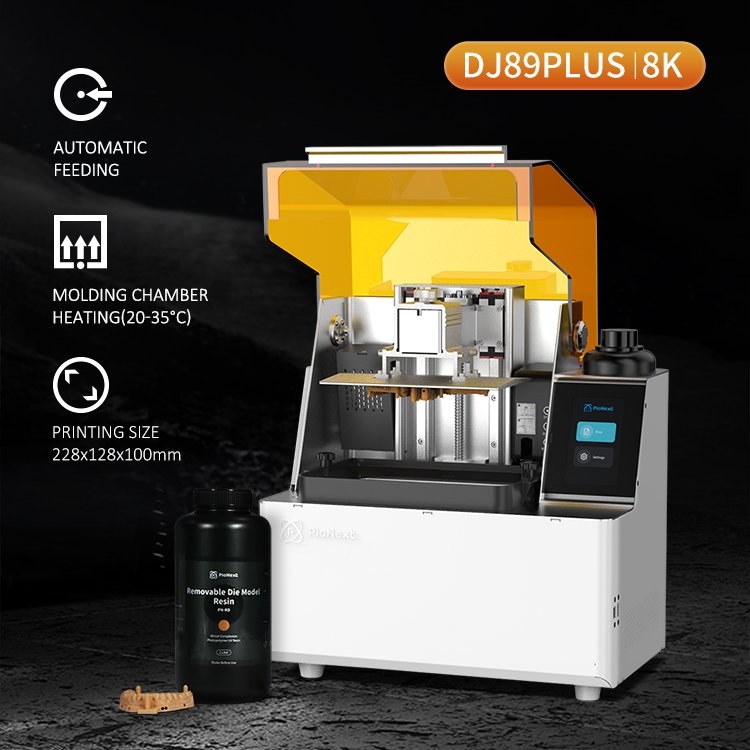
Peruvian dental clinics are increasingly adopting in-house 3D printing for surgical guides, temporary prostheses, and clinical models. A recent inquiry from Lima captures the specific challenge that follows the printer purchase — sourcing the correct resin chemistry for implant-grade applications. "3D printing resin for final implant material" is a loaded phrase: it can mean very different things depending on whether the application is a drilling guide (which contacts oral tissue briefly), a temporary prosthesis (weeks of contact), or a definitive structure (years of contact). Each has different resin chemistry, biocompatibility, and regulatory profile. This guide walks through what Peruvian clinics actually need to know.
"3D printing resin for final implant material."
— Dental clinician in Peru (contact on file)
Resin chemistry by clinical application
The phrase "final implant material" most commonly refers to one of three distinct applications, each requiring a different resin chemistry:
- Surgical drilling guide (short-term oral contact, less than 24 hours): Class I or IIa medical device. Rigid transparent resin, biocompatible for limited contact. USP Class VI compliant preferred. Typical resins: Formlabs Surgical Guide, NextDent SG, BEGO VarseoSmile Ortho. Chinese equivalents: USD 180–280 per kg FOB Shanghai.
- Temporary crown and bridge (weeks to months contact): Class IIa medical device. Resin must be biocompatible for extended oral contact, resist color change, and machinable after printing. Typical resins: NextDent C&B, BEGO VarseoSmile Crown Plus, Formlabs Temporary CB. Chinese equivalents: USD 260–420 per kg FOB Shanghai.
- Definitive prosthesis (multi-year intraoral residence): Class IIb or higher. Requires full ISO 10993 biocompatibility series testing, extensive clinical validation. Very few printed resins worldwide are cleared for truly permanent use — most "permanent" printable resins are cleared for 1–3 years of clinical residence, not true lifetime use. Typical resins: NextDent Crown (Class IIa, up to 3 years use), BEGO VarseoSmile Crown Plus. Chinese equivalents under development — do not market to Peruvian clinicians as "permanent" unless supplied with clinical validation data.
Biocompatibility: what the standards actually require
Two overlapping standard sets govern biocompatibility of dental 3D printing resins:
- ISO 10993 series (ISO 10993-1, -5, -10, -11): Progressive testing for cytotoxicity, sensitization, irritation, systemic toxicity. Duration of contact classification drives which tests apply. For short-term oral contact, ISO 10993-5 (cytotoxicity) and ISO 10993-10 (irritation and sensitization) are minimum. For longer contact, add ISO 10993-11 (systemic toxicity) and potentially ISO 10993-3 (genotoxicity).
- USP Class VI: Historically the US standard, widely referenced globally. Tests for systemic injection toxicity, intracutaneous toxicity, and implant reactivity. Class VI compliance is a reasonable first-pass filter for dental applications.
A reputable Chinese-manufactured dental resin supplier will provide ISO 10993-5 and ISO 10993-10 test reports from an accredited third-party lab (not an in-house report) for any resin marketed for oral contact applications. Reject any supplier who cannot produce these reports on request.
DIGEMID classification and import
Peru regulates medical devices through the Dirección General de Medicamentos, Insumos y Drogas (DIGEMID), part of the Ministry of Health. Dental 3D printing resins are classified based on intended contact duration:
- Surgical guide resin (limited contact): Class IIa. Sanitary registration (registro sanitario) required for commercial import and resale. Personal use by a practicing dentist is typically processed under simplified declaration.
- Temporary prosthesis resin (extended contact): Class IIa. Full sanitary registration required.
- Model resins (no patient contact): Class I or unregulated. Simplified import path.
Sanitary registration timeline in Peru: 4–8 months for Class IIa dental materials. Importers with existing dental consumable portfolios can typically bundle resin registration with other ongoing submissions, reducing per-resin administrative overhead.
Shipping Shanghai to Callao
Peru's primary container port is Callao (Lima). Typical shipping characteristics for dental resins:
- Shanghai to Callao via Panama: 28–35 days port-to-port direct routing
- Shanghai to Callao via Manzanillo (Mexico): 32–42 days, common via transshipment
- Temperature-controlled shipping: Required for most dental resins. Resin viscosity and shelf life degrade rapidly above 30°C. Specify temperature-controlled container (15–25°C) or expedited air freight for orders originating during summer months
- Shelf life preservation: Unopened resin bottles stored at 10–25°C typically retain full properties for 12–18 months. Transit time + storage time must stay inside this window.
Duty and tax in Peru
Peruvian import duty on dental resins (HS 3907.91 or 3909.50): 0–6% import duty depending on specific classification, plus 18% IGV (Impuesto General a las Ventas). Dental materials often qualify for reduced duty rates under Peruvian healthcare product provisions. A worked example for a USD 3,500 FOB resin order (approximately 14 kg of mixed surgical guide + C&B resin):
- FOB Shanghai: USD 3,500
- Air freight Shanghai to Lima (Callao), temperature-controlled: USD 580
- CIF Callao: USD 4,080
- Import duty 0–6%: USD 0–245
- IGV 18% on CIF + duty: approximately USD 734–778
- Broker, clearance, inland to Lima: USD 180
- All-in landed Lima: approximately USD 5,000–5,300
Case-level resin economics
At landed cost of approximately USD 280–350 per kg for surgical guide resin and USD 350–450 per kg for C&B resin, per-case resin cost in a Peruvian clinic:
- Surgical drilling guide (single implant): 15–25g resin, USD 4.50–8.75 resin cost. Patient fee USD 150–280. Strong margin.
- Full-arch drilling guide (All-on-4): 60–90g resin, USD 18–31 resin cost. Patient fee USD 400–700. Strong margin.
- Temporary crown (single unit): 3–5g resin, USD 1–2.25 resin cost. Patient fee USD 80–150. Very strong margin.
Per-case resin economics are comfortable at Peruvian price points. The economic pressure is not resin cost — it's ensuring the clinic prints a volume large enough that resin shelf-life losses don't erode margin. A clinic printing fewer than 8–10 cases per month may lose 10–15% of ordered resin to expiry; at 20+ cases per month, utilization waste drops below 3%.
Printer compatibility matters
Chinese-origin dental resins are tuned to specific wavelengths and exposure profiles. Before ordering, verify:
- Printer light source wavelength (405nm is standard; some older DLP printers use 385nm)
- Exposure time profile matches resin's recommended range (too short = undercured, too long = brittle)
- Build platform compatibility with the resin's adhesion profile
- Post-cure protocol (IPA wash time, UV post-cure duration, oven temperature if required)
A responsible resin supplier provides printer-specific exposure files (.slicer, .3dlprint, .ctb, etc.) for at least 4–5 of the most common dental printer platforms (Phrozen Sonic Mini 8K, Anycubic Photon Mono X, Shining 3D AccuFab, SprintRay Pro, Formlabs Form 3B+). Ask for these before purchase.
Sourcing biocompatible resin for your Lima clinic?
WhatsApp us with your printer model (Shining 3D, Phrozen, Anycubic, etc.), case volume, and application mix (surgical guides, temporaries, models). We'll share resin options with ISO 10993 documentation, biocompatibility test reports, and CIF Callao pricing.
Chat on WhatsApp →