Dental 3D Printers for Israeli Clinics: Chinese DLP Alternatives to Stratasys J5 DentaJet and Origin Two
How Israeli private dental clinics source DLP and LCD 3D printers from Shanghai as alternatives to Stratasys J5 DentaJet, Origin Two, and TrueDent workflow. Covers clinical output comparison, CE marking, MoH registration, Haifa port logistics, and Tel Aviv landed cost.
Israeli dental practice represents one of the most digitally-advanced per-capita markets globally. Tel Aviv, Jerusalem, Haifa, and Beersheba support dense clusters of private clinics running complete digital workflows, including aggressive in-house 3D printing adoption. A recent Israeli clinician inquiry specifically referenced Stratasys, the Israeli-founded 3D printing company whose dental product lines (J5 DentaJet, Origin Two, TrueDent) are benchmark platforms for polyjet and DLP dental printing. The inquiry captures the practical question: Stratasys dental printers are expensive even in the Israeli domestic market; are there Chinese-origin alternatives that deliver similar clinical output at substantially lower cost? This guide walks through the comparison.
"Dental Stratasys 3D printer."
— Dental clinic in Israel (contact on file)
Stratasys dental printer family, briefly
Stratasys produces several dental-specific 3D printer platforms occupying distinct market segments:
- J5 DentaJet: flagship polyjet printer, multi-material color capability, dental lab production scale. USD 90,000–140,000 new-in-box globally. Produces clinical models, surgical guides, temporary prostheses, and aesthetic permanent crowns (TrueDent material).
- Origin Two: mid-tier DLP printer targeting prosthodontic and orthodontic lab workflow. USD 35,000–55,000 globally.
- TrueDent workflow: Stratasys’ permanent-crown printing pathway combining Origin Two hardware with proprietary multi-shade ceramic-composite resin and post-processing chemistry. Currently unique in printed permanent crown clinical validation.
Stratasys’ competitive advantage is multi-material polyjet capability (J5 DentaJet prints multi-color, multi-stiffness parts simultaneously) and proprietary TrueDent material chemistry for printed permanent crowns. For workflow contexts that don’t specifically require these capabilities, alternative platforms deliver equivalent clinical output at substantially lower pricing.
What the Israeli clinic actually needs
An Israeli private dental clinic asking about Stratasys typically wants 3D printing capability for some combination of:
- Surgical drilling guides for implant placement
- Temporary crowns and bridges
- Occlusal splints and night guards
- Clear aligners (in-house or lab partnership)
- Clinical models for prosthetic case planning
- Study models for orthodontic case presentation
Only the aesthetic permanent crown pathway specifically requires Stratasys TrueDent workflow. Every other application can be addressed by DLP or LCD resin printers from multiple manufacturers at USD 4,500–12,000 price points — roughly 10–20% of Stratasys J5 DentaJet pricing.
Chinese DLP/LCD 3D printer alternatives
Chinese-manufactured dental 3D printers have matured substantially between 2021 and 2026. Current mid-tier and premium Chinese platforms deliver clinical quality matching mid-tier European and US equivalents:
- Shining 3D AccuFab-L4K: 4K LCD, 50 µm XY resolution, 10 µm Z resolution, validated for dental models, surgical guides, temporaries. USD 4,800–6,800 FOB Shanghai. Widely deployed in European and North American dental labs as a reliable mid-tier option.
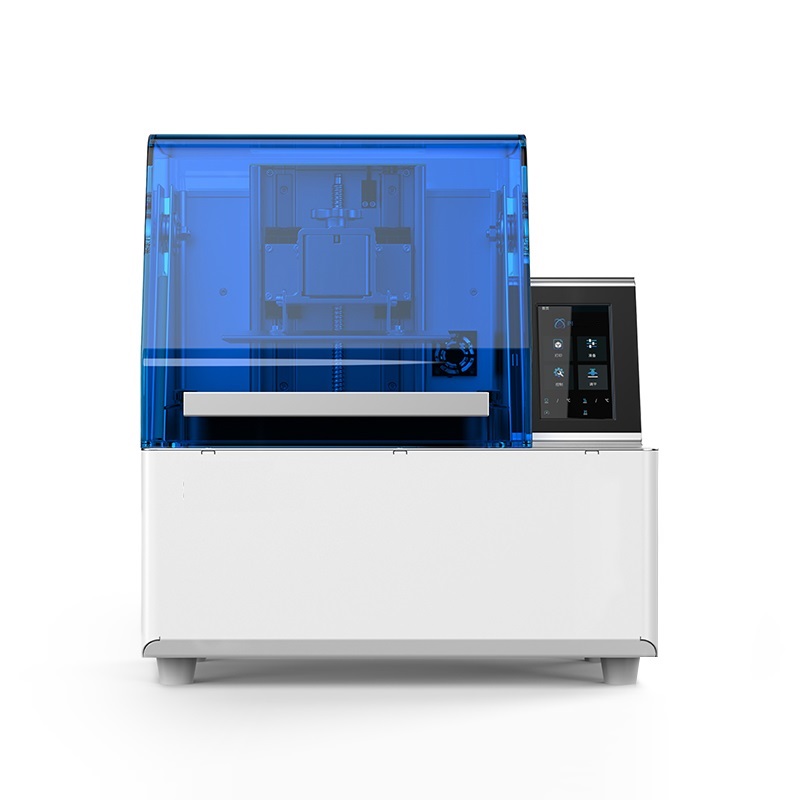
- PioNext DJ89PLUS 8K: 8K LCD with AUTOMATIC FEEDING system, heated molding chamber (20–35°C), 228×128×100mm build volume. USD 6,500–9,500 FOB Shanghai. Strong build volume enables batch production of multiple models or splints simultaneously.
- Phrozen Sonic Mini 8K (for single-operator chairside): 8K LCD, compact footprint, 22 µm XY resolution. USD 1,800–2,800 FOB Shanghai. Appropriate for single-unit surgical guide production but not batch lab work.
- Anycubic Photon Mono M5s Pro: 12K LCD, 18 µm XY resolution, USD 2,400–3,800 FOB Shanghai. Competitive for small-form dental applications.
Clinical quality comparison
For the core dental applications — surgical guides, temporaries, models, splints — Chinese DLP/LCD printers at the USD 5,000–10,000 FOB tier deliver clinical output indistinguishable from Stratasys Origin Two or Formlabs Form 3B+ in controlled studies. Where Chinese platforms trail:
- Multi-material printing: Chinese DLP/LCD printers are single-material. Stratasys J5 DentaJet prints multiple materials simultaneously. For Israeli clinics specifically wanting the J5’s multi-material workflow (combined model + surgical guide + provisional printed in one cycle), Chinese platforms don’t match.
- Printed permanent crown workflow: Stratasys TrueDent is currently unique. No Chinese-manufactured resin system has completed equivalent clinical validation for permanent crown indication as of 2026.
- Software ecosystem depth: Stratasys GrabCAD and integrated dental workflow have been developed over 15+ years. Chinese platforms have good but less mature software ecosystems.
- After-sale support in Israel: Stratasys has Israeli domestic service infrastructure. Chinese manufacturers rely on remote support + air-shipped parts from Shanghai.
Resin chemistry: the often-overlooked factor
The 3D printer is half the workflow; the resin chemistry is the other half. For Israeli clinical practice, biocompatible resin access matters:
- Surgical guide resin: ISO 10993-5 and -10 compliance required. Chinese-origin surgical guide resins widely available from USD 180–280 per kg FOB Shanghai.
- Temporary crown and bridge resin: ISO 10993 extended contact compliance. Chinese-origin C&B resins USD 260–420 per kg FOB.
- Clear aligner / splint resin: shorter contact but mechanical properties matter. Chinese-origin splint resins USD 180–280 per kg FOB.
- Printer compatibility: verify the resin supplier provides exposure profiles for your specific Chinese printer platform (Shining AccuFab, PioNext DJ89, Phrozen Sonic, etc.)
Shipping Shanghai to Israel
Israel’s primary container port is Haifa, with Ashdod as alternative. Typical shipping:
- Shanghai to Haifa via Suez Canal: 30–40 days port-to-port
- Shanghai to Haifa via Mediterranean transshipment: 35–45 days, similar cost
- Air freight Shanghai to Tel Aviv (TLV) via Istanbul or Dubai: 7–12 days, USD 5–7 per kg. A mid-tier DLP printer approximately 30–45kg packaged: USD 175–300 air freight.
- Customs clearance at Haifa or Ashdod: 4–8 business days typical for medical equipment
Israeli MoH medical device registration
Israel regulates medical devices through the Medical Devices Division of the Ministry of Health. Classification:
- Dental 3D printers (equipment): typically Class I or IIa depending on specific clinical use classification
- Biocompatible resins: Class IIa (direct patient contact, extended or short duration)
- Israeli MoH registration timeline: typically 4–8 months for Class IIa devices
- Required documentation: manufacturer ISO 13485, CE marking (strongly preferred; nearly required for practical Israeli market acceptance), clinical evaluation summary, Hebrew-language or English-language IFU (Hebrew not mandatory but increasingly expected for user-facing documentation)
Duty, VAT, and landed cost
Israeli customs duty on 3D printers (HS 8477.80 or 9018.49 depending on classification): typically 0–6% under Israeli medical equipment provisions, plus 17% VAT. Worked example for a PioNext DJ89PLUS 8K at USD 7,500 FOB:
- FOB Shanghai: USD 7,500
- Air freight to Tel Aviv: USD 230
- Insurance: USD 35
- CIF Tel Aviv: USD 7,765
- Customs duty 3% (blended medical equipment rate): USD 233
- VAT 17% on CIF + duty: USD 1,360
- Broker, port, inland delivery: USD 280
- All-in landed Tel Aviv clinic: approximately USD 9,638
Compare to a Stratasys Origin Two landed Israel at USD 38,000–52,000 or J5 DentaJet at USD 95,000–145,000 — the Chinese alternative captures roughly 75–90% of the clinical utility at 20–25% of the equipment cost for standard dental 3D printing workflows.
The Stratasys/domestic brand case
One legitimate reason Israeli clinics may still choose Stratasys despite price premium: supporting Israeli domestic manufacturing and maintaining the local service infrastructure that benefits the broader Israeli dental printing ecosystem. This is a real factor and reasonable basis for purchasing decision. Clinics that don’t weight this factor heavily, or who are already using non-Stratasys printers, face clear economics favoring Chinese mid-tier platforms.
For clinics committed to Stratasys workflow but looking to reduce cost: consider Stratasys-certified pre-owned Origin Two units through authorized refurbishment channels, typically USD 22,000–32,000 landed Israel with full Stratasys service coverage.
Typical case-level economics
For an Israeli clinic printing 20–40 surgical guides, 10–25 temporary crowns, and 15–30 splints per month:
- Patient fee per surgical guide: NIS 450–700 (approximately USD 125–195)
- Patient fee per temporary crown: NIS 300–550 (approximately USD 85–155)
- Patient fee per occlusal splint: NIS 900–1,500 (approximately USD 250–420)
- Monthly 3D printing revenue range: USD 12,000–28,000
- Monthly resin + consumables cost: approximately USD 300–650
- Monthly gross margin on printing workflow: USD 11,000–27,000
- Chinese printer payback: 1–2 months at this utilization; Stratasys Origin Two payback: 4–8 months; J5 DentaJet payback: 8–20 months depending on case mix
Sourcing a dental 3D printer for your Israeli clinic?
WhatsApp us with your workflow priorities (surgical guides, temporaries, splints, aligners, printed permanent crowns), monthly case volume, and any specific Stratasys feature requirements. We’ll propose matched Chinese DLP/LCD platforms, quote CIF Tel Aviv with MoH documentation timeline, and provide honest comparison against Stratasys benchmark where that option applies.
Chat on WhatsApp →