CAD/CAM Pricing for Guatemalan Dental Clinics: Yucera Milling, Shining 3D, Aligners, and Splints
How a Guatemala City clinic running a Yucera dry mill and a Shining 3D printer builds out its digital dentistry pricing — covering upgrade paths, aligner and splint costing, consumable economics, and workflow migration decisions.
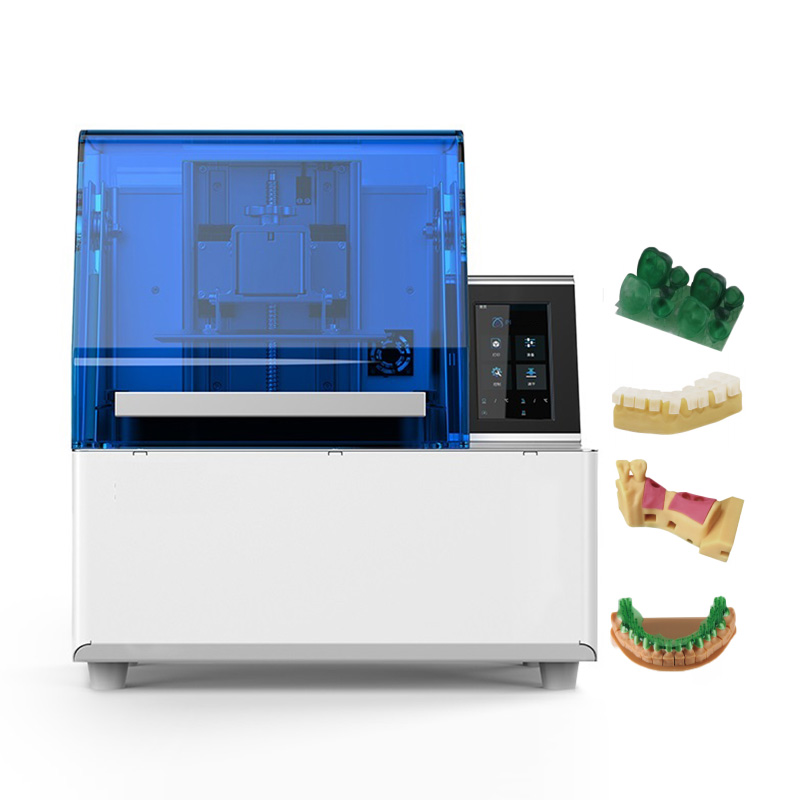
A Guatemala City clinic owner sent us an inquiry recently that captures the exact position many Latin American clinics find themselves in: "In my clinic I have a Yucera dry milling machine, a Shining printer. I need to know prices of each unit, aligners, splints etc." The question isn't really about price — it's about whether the existing CAD/CAM workflow is priced correctly, where the consumable margins are, and whether it's time to upgrade individual components. This guide works through the digital dentistry economics for a mid-sized Guatemalan clinic in 2026.
"Prices of dental designs. In my clinic I have a Yucera dry milling machine, a Shining printer. I need to know prices of each unit, aligners, splints, etc."
— Dental clinic in Guatemala City (contact on file)
What a Yucera + Shining workflow typically costs to run
The combination of a Yucera dry mill (typically 4-axis, wet/dry capable, open architecture) paired with a Shining 3D printer (AccuFab or similar DLP/LCD class) is a well-designed mid-tier CAD/CAM setup. New-in-box pricing in Central America for this combination lands approximately:
- Yucera 4-axis dry mill: USD 11,000–15,000 new, landed Guatemala City
- Shining 3D AccuFab-L4K or equivalent DLP printer: USD 4,500–7,500 new, landed
- Exocad or 3Shape Dental System CAD license: USD 3,500–6,000 one-time
- IOS (if not included): typically USD 7,000–12,000 for mid-tier platform
Total CAD/CAM equipment investment for the clinic in question sits at approximately USD 25,000–35,000 landed in Guatemala City. The real question is whether each individual unit is optimally priced for the volume it processes.
Case-level pricing: where the clinic actually makes money
Case-level pricing for digital dentistry in Guatemala City in 2026:
- Zirconia crown (milled in-house): Patient fee USD 250–400. Materials + labor: approximately USD 45–75. Gross margin 75–85%.
- PMMA provisional: Patient fee USD 80–150. Materials: approximately USD 8–15. Highest margin category.
- Occlusal splint (printed SG resin): Patient fee USD 120–200. Print materials + design time: approximately USD 15–25. Strong margin, fast throughput.
- Clear aligner set (in-house printed): Patient fee USD 1,800–3,500 per full-arch treatment (10–20 aligners). Consumables (thermoform sheets, printed models, cutting): approximately USD 120–220 per full case. Very high margin but requires clinical expertise and IPR/staging workflow.
- Surgical guide (implant): Patient fee USD 150–300. Print cost: approximately USD 10–20. Complementary to implant placement fees.
For a clinic seeing 40–60 new CAD/CAM cases per month at this mix, monthly gross margin on digital work typically lands in the USD 6,000–15,000 range — easily justifying the original equipment investment within 3–8 months.
When to upgrade: the 18-month review
A clinic running its Yucera + Shining workflow for 18+ months should review three specific upgrade triggers:
- Mill spindle hours exceeding 1,200: Brushless spindle life on 4-axis dry mills typically runs 1,500–2,500 hours before rebuild. Proactive spindle replacement at 1,200 hours avoids failure during production. Replacement spindle USD 800–1,500 landed.
- Printer build platform wear: DLP/LCD printer LCD panels degrade with UV exposure. Target LCD replacement at 1,500–2,500 print hours. Replacement USD 150–400 landed.
- CAD software plugin gaps: If the clinic is doing more than 10 aligner cases per month, a dedicated aligner staging plugin (exoplan, Blue Sky Plan, or ortho-specific add-on) returns its cost in design time saved within 2–3 months.
Should this clinic migrate to a 5-axis wet mill?
The most common upgrade question at the 18-month mark: migrate from 4-axis dry to 5-axis wet/dry. The case for upgrade:
- 5-axis capability enables undercuts in full-contour zirconia, truly anatomic occlusal surfaces
- Wet milling extends tool life dramatically (2–4× on zirconia)
- Modern 5-axis mills handle lithium disilicate and glass ceramic — opens e.max-class restoration pricing
- Price point for Chinese-made 5-axis wet/dry mills: USD 18,000–26,000 landed Guatemala — accessible to a clinic with 18 months of digital case revenue history
The case against upgrade: if the clinic is already at 95%+ spindle utilization on the existing Yucera and the 4-axis tool limitations aren't producing rework, the upgrade primarily buys material flexibility (e.max) rather than throughput. Review the case mix honestly — if the clinic isn't turning down glass ceramic cases today, wait on the 5-axis migration.
Aligner economics at Guatemala price points
In-house printed aligners are the single highest-margin category in a Guatemala digital dentistry practice. A 16-aligner Class I mild crowding case:
- Patient fee: USD 2,400–2,800 typical Guatemala City
- Clinical time: consultation + IOS scan + staging review (4–5 hours total, spread across 3 appointments)
- Design time in aligner-specific CAD: 90–150 minutes
- Print time: 16 models × approximately 45 min each = approximately 12 hours (printer runs overnight, unattended)
- Thermoforming: 16 aligners × 3 min = 48 min active time
- Consumables: approximately USD 140 (thermoform sheets, resin, cutting)
- Gross margin per case: USD 2,100–2,500
A clinic doing 4 aligner cases per month generates USD 8,400–10,000 of aligner-category margin alone. This economic reality is why many Guatemalan clinics prioritize aligner capability investment over glass ceramic mill upgrades in the first 24 months of digital dentistry operation.
Splint pricing and batch production
Occlusal splints and night guards are the quiet workhorse of a Guatemala digital lab. Unlike aligners (multi-aligner sequential treatment), splints are single-piece outputs with fast turnaround and low clinical complexity. Pricing in Guatemala City typically runs USD 120–200 per splint for straightforward night guards, USD 250–400 for full-arch occlusal stabilization splints. Per-splint materials cost is USD 15–25 depending on resin chemistry; design time is 30–45 minutes once a library of templates is established.
Batch printing is the throughput trick. A DLP printer at typical 50μm layer heights can print 4–6 splints simultaneously in a single print cycle of 90–120 minutes. A clinic batching 5 splints per print run produces 20–25 splints per week with essentially no incremental print time per unit — the printer runs while staff see patients.
Planning a CAD/CAM refresh for your Guatemala clinic?
WhatsApp us with your existing equipment, current monthly case volume, and any specific pain points (spindle wear, printer LCD life, software gaps, 5-axis migration considerations). We'll build a targeted upgrade path with pricing landed in Guatemala City and reasonable ROI timelines.
Chat on WhatsApp →